

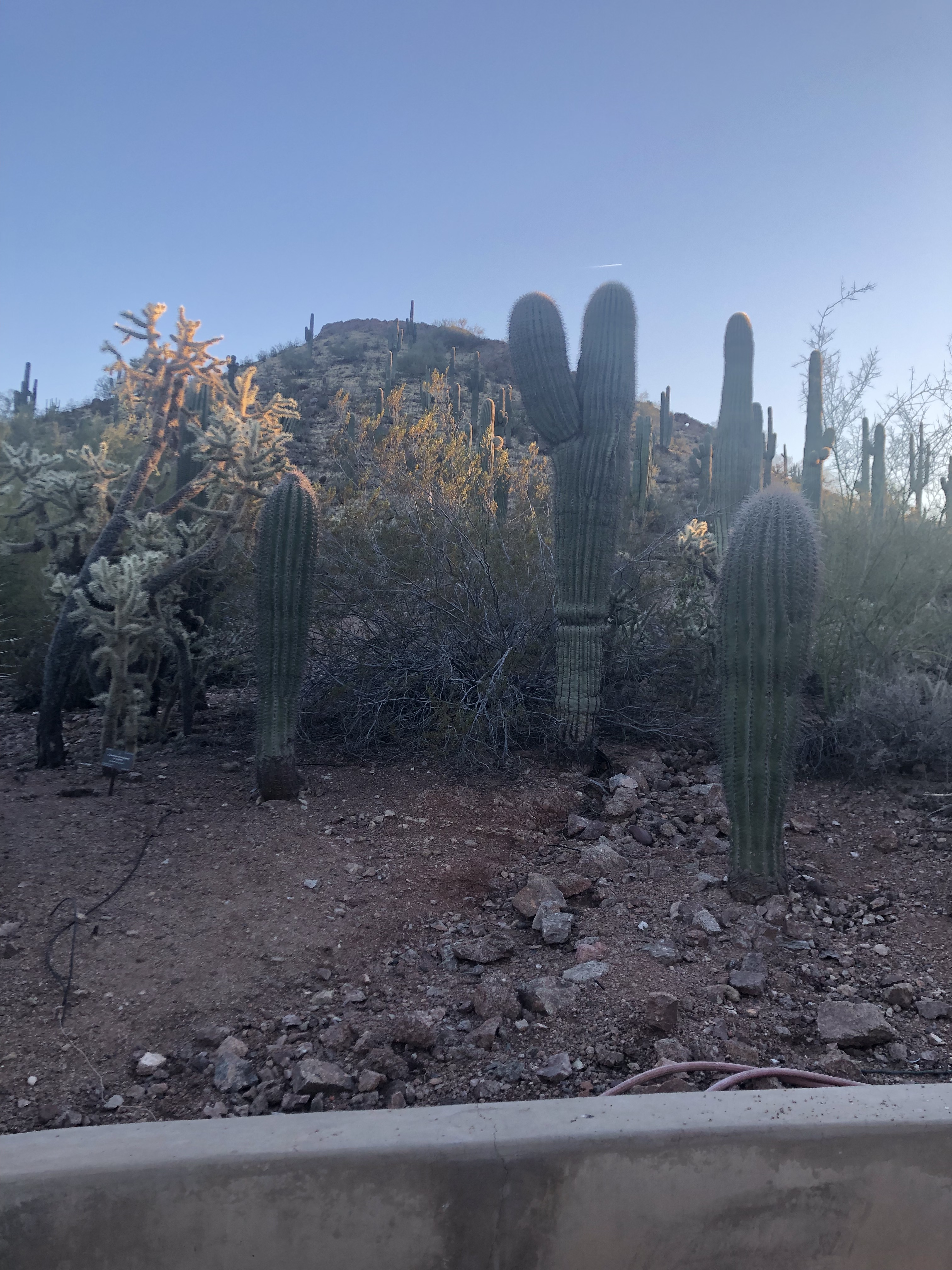
The most recognizable symbol of Arizona is the saguaro cactus, Carnegiea gigantea. It is a columnar cactus and can grow up to 50 feet tall (one was recorded at 68 feet tall when it fell north of Phoenix), with 30 feet being common. In the typical picture of a saguaro, they have one arm on each side. They do not start to grow those arms until they are around 50 years old, and then they can grow many arms, not just two, and some may never grow arms, depending on the environment. Also, the arms do not always point upward – I have seen them curved in every direction, which may also have something to do with their environment.
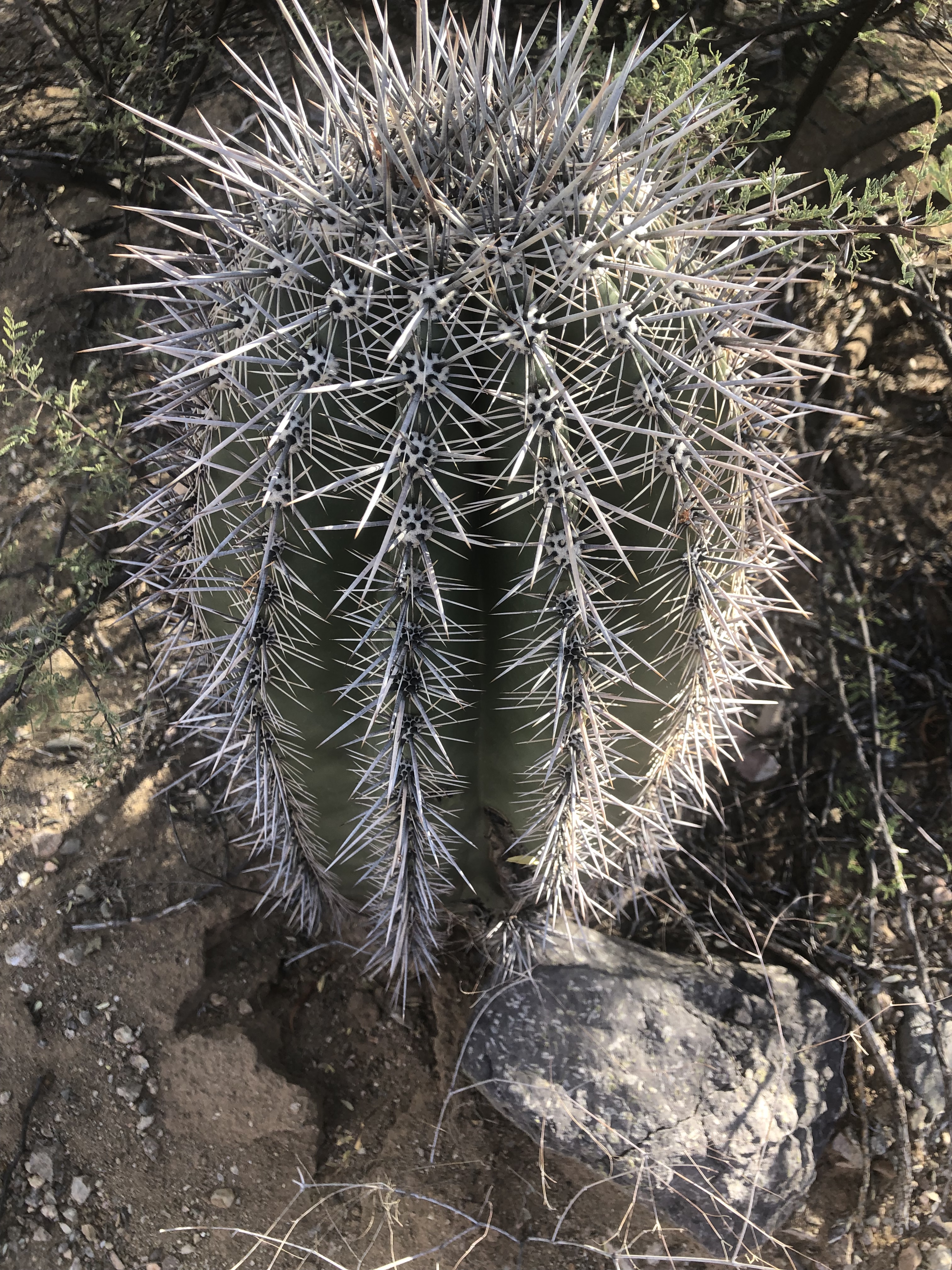
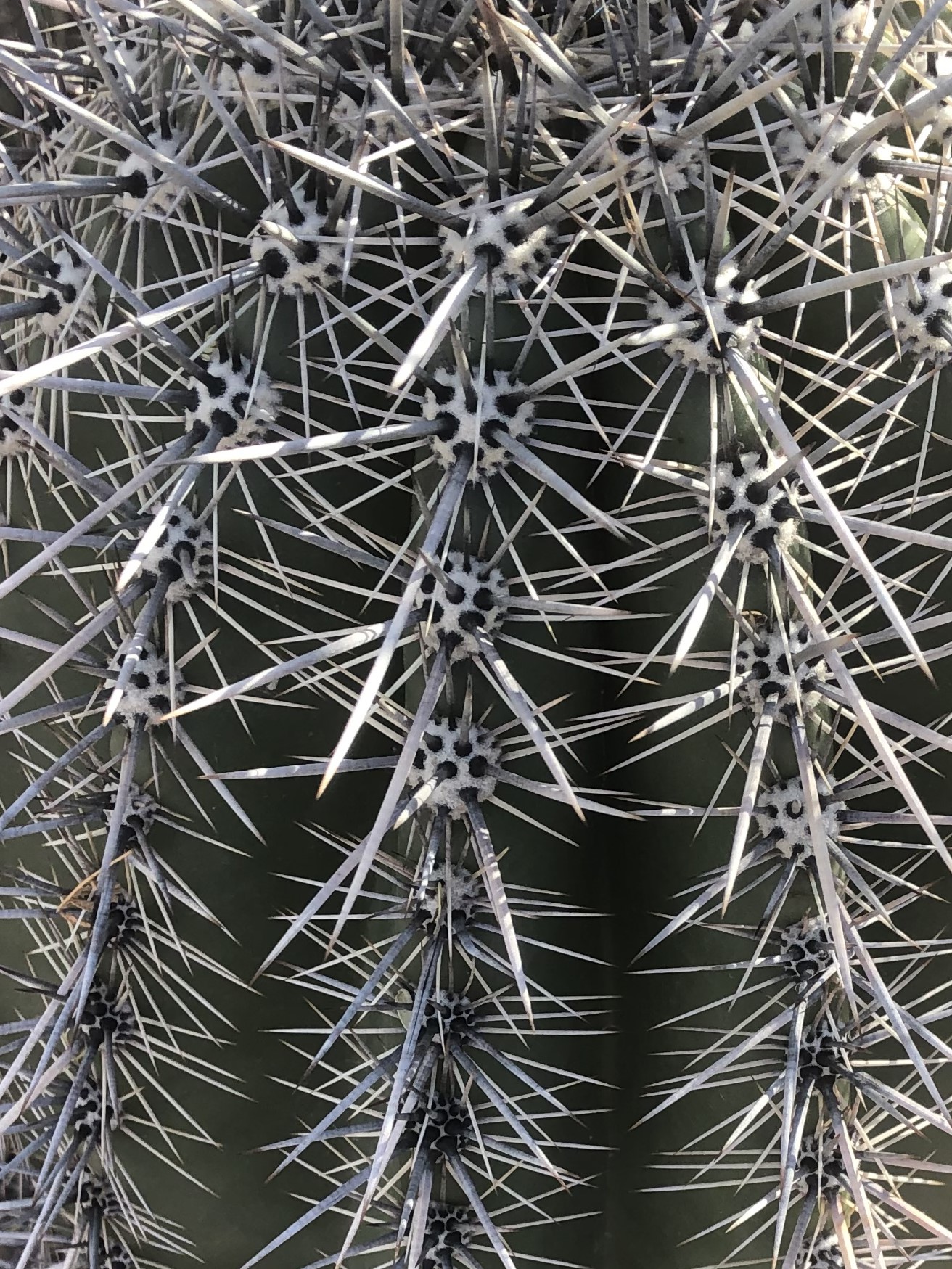
The saguaro has 12-25 ribs, and the spines line the ribs. However, the spines are not just in a row on the rib. Cacti have areas where the spines protrude called an areole. From this areole on the saguaro several central spines emerge and are surrounded by a circle of radial spines. Think of the spines like leaves and the areoles as the area on the plant where the leaves are attached. The saguaro ribs are lined with areoles. The number of central and radial spines, as well as the shape and color of the spines, are some of the ways that scientists identify different species of cacti.

In the spring the saguaros will flower and fruit in the spring, with a ring of white flowers around the top like a crown. Each fruit contains about 3500 seeds, which are tiny and black. You might ask if there are so many seeds, why aren’t there saguaros everywhere. I have learned from trying to grow saguaros from seeds that they need a lot of water to get going, and we don’t have that in the desert very often. Mine kept dying when I left on a work trip. They cannot have too much or too little rain, and cannot stand temperatures that are too cold (they are more heat tolerant). So I think it is very special for a saguaro seed to take hold and grow in nature. The ideal conditions in nature are rare, and even then, the seedlings could be trampled or eaten by animals.
I have included a variety of pictures, including a close-up where you can see the areoles and spines in a younger saguaro (based on its size, I am guessing it is maybe 15 years old, maybe 20). You can also see holes in some of the saguaros because they are a habitat for multiple animals, including birds. You can just see a little head of a resident bird sticking out in one of the pictures. Finally, just for fun I included a picture of the light at the start-finish line at Phoenix International Raceway – it is of course shaped like a saguaro!

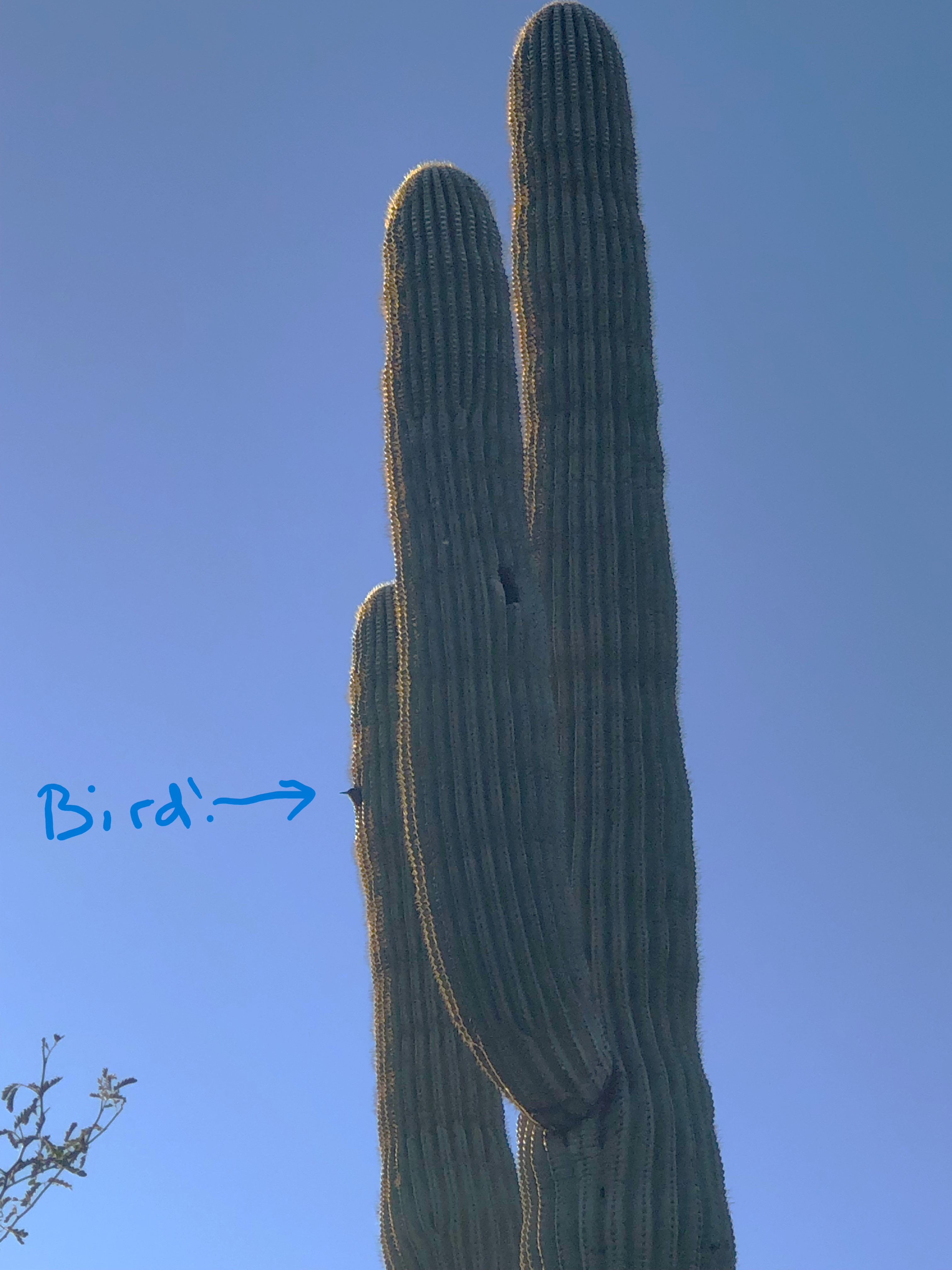


I hope that you enjoyed the pictures and learned something new. The only photo that had any editing was the one with the bird so we could see it a little better. The rest are untouched and taken with an iPhone by me (yes the sky is really that blue in Arizona almost every day). This won’t be my last post about saguaros because I have a book just about saguaros, and there is a long list of published research studies about them as well. Much to learn and share about the iconic symbol of Arizona!


 Michelle Rambles