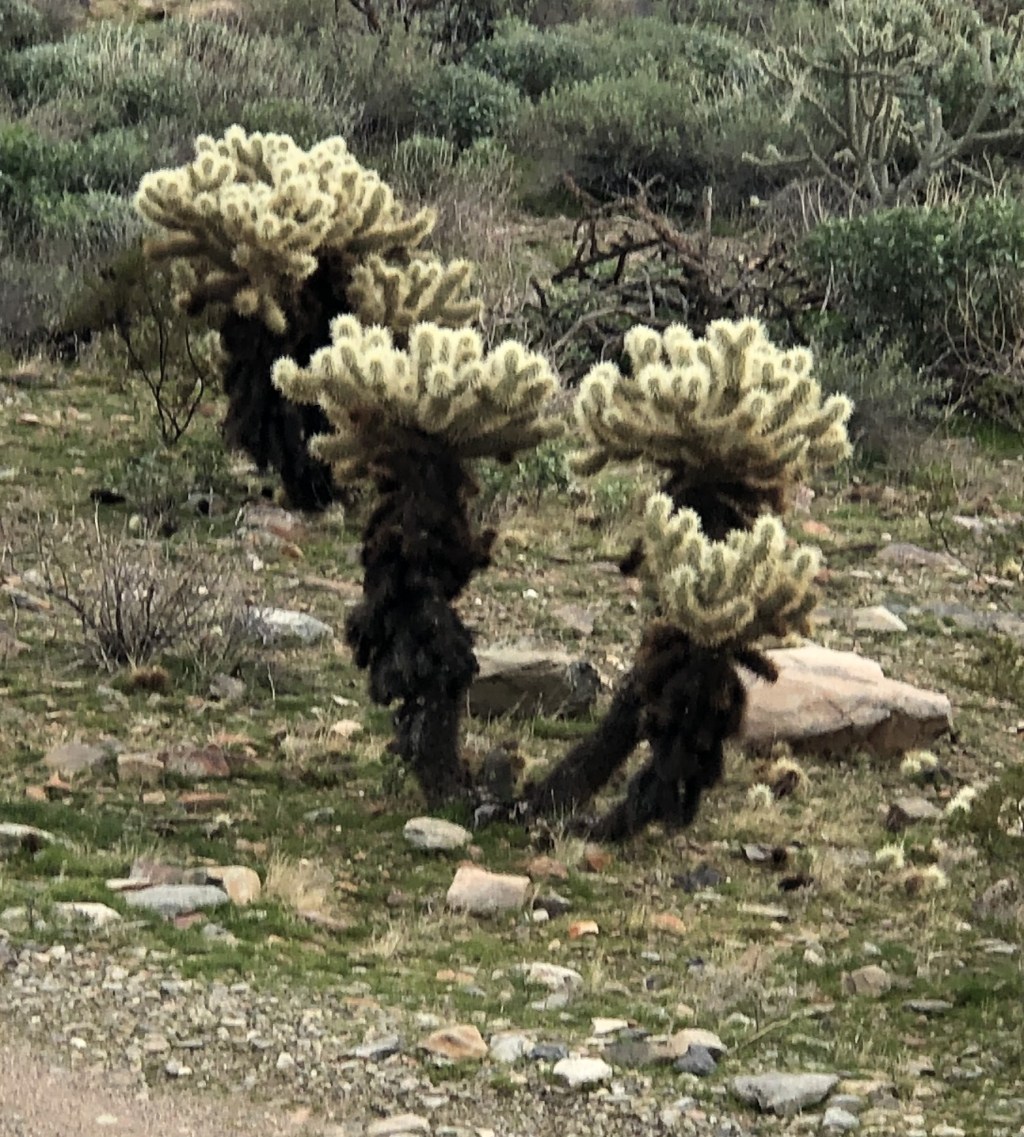
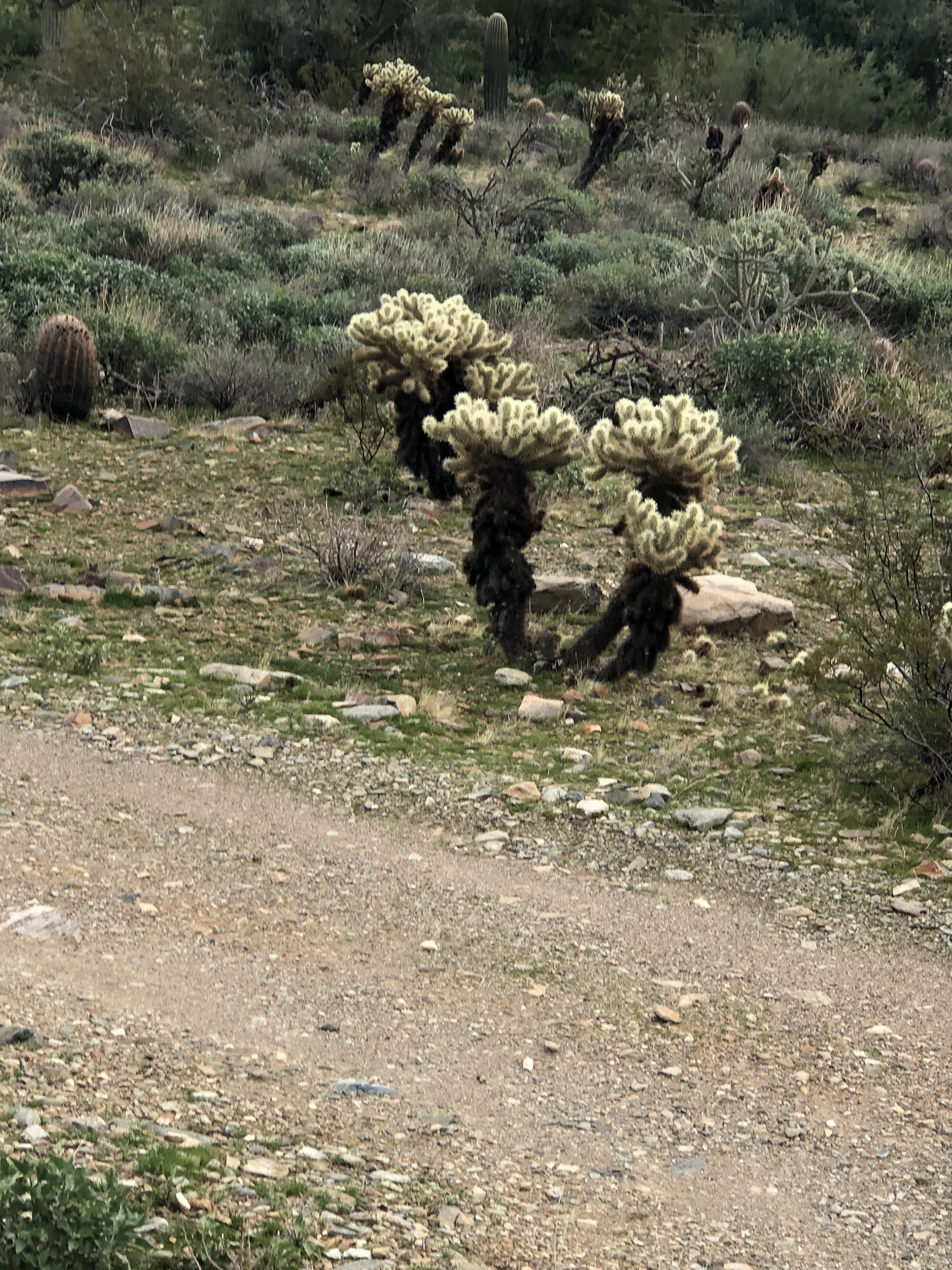

This week’s Cactus Corner spotlight is on one of the cholla cacti (pronounced choy-uh), specifically the teddy-bear cholla (also called the jumping cholla – a few cacti have the ‘jumping’ nickname). Cylindropuntia bigelovii is widespread throughout central and southern Arizona, with pockets in the northwestern part of the state. It is also readily found throughout southern California and southern Nevada. This cactus is notorious in the Southwest. From far away, the plants appear fuzzy and soft, like a teddy bear, thus the nickname. However, the spines are barbed and can easily catch on clothes and skin, with a very painful outcome. I first became aware of this cactus due to a video that my son played for me. In the video, one person was ‘cholla-ed’ as I now call it – he had a small cholla stems attach to his clothes and then penetrate the skin. His companion took a multi-tool to remove the stems, and the victim was in extreme pain. The person removing them was actually caught by one of the stems he removed from his friend. Why pliers/multi-tool? If you try to pull it off with anything made of cloth, such as a gloved hand, the barbs will catch on the glove and you will both be stuck. You also risk pushing it further into the skin, making it more difficult and painful to remove due to the barbs. So you need something firm, like pliers, a comb, or even cooking tongs if you are near your house. The jumping nickname comes from the fact that you can walk by and think you aren’t that close, and suddenly a cholla stem is stuck to you. The barbs make it particularly painful to remove. As a result, I always steer clear of the jumping chollas. (Here is the Coyote Peterson video referred to above – https://www.youtube.com/watch?v=dJzTse9Dsaw).
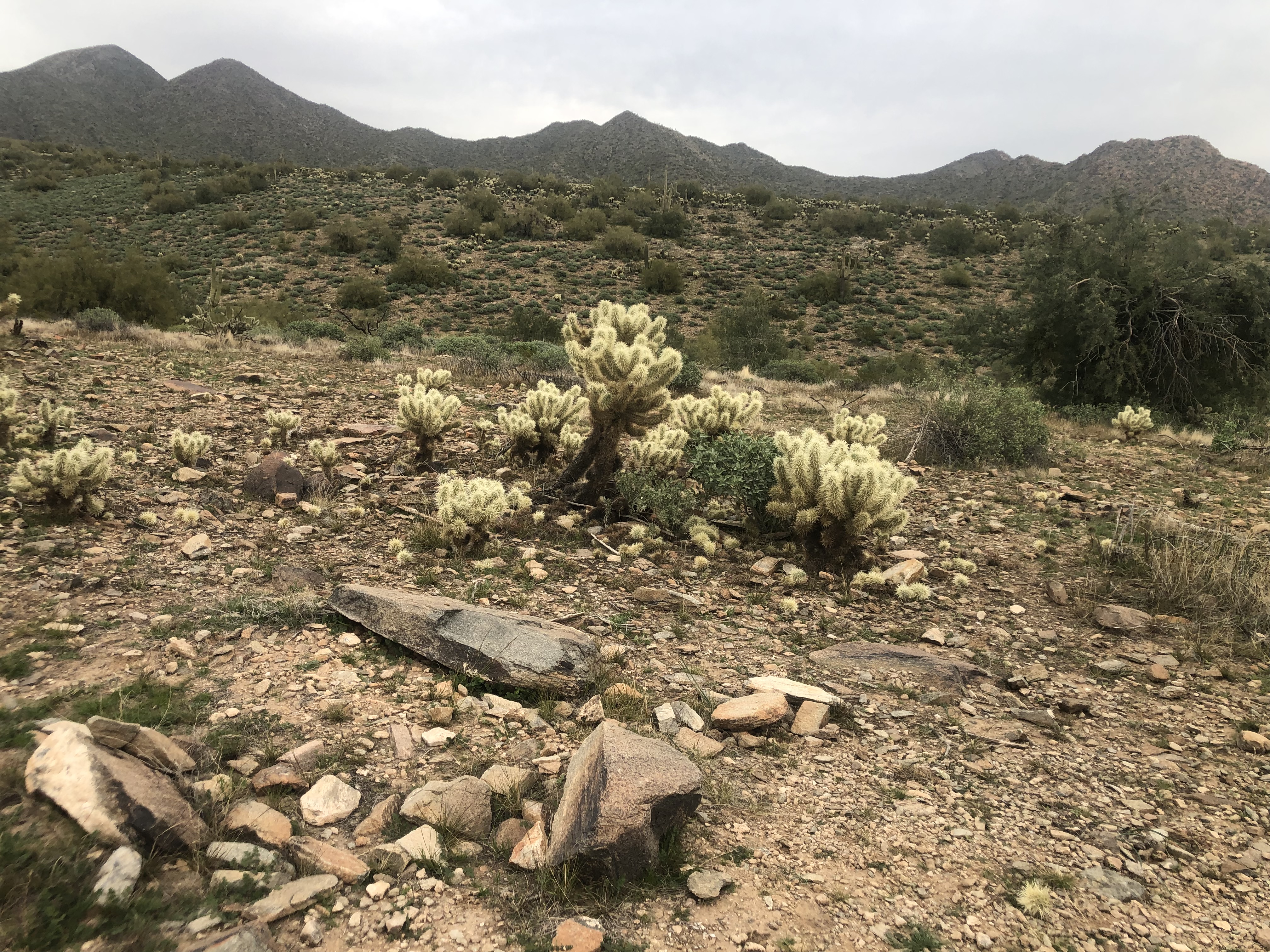
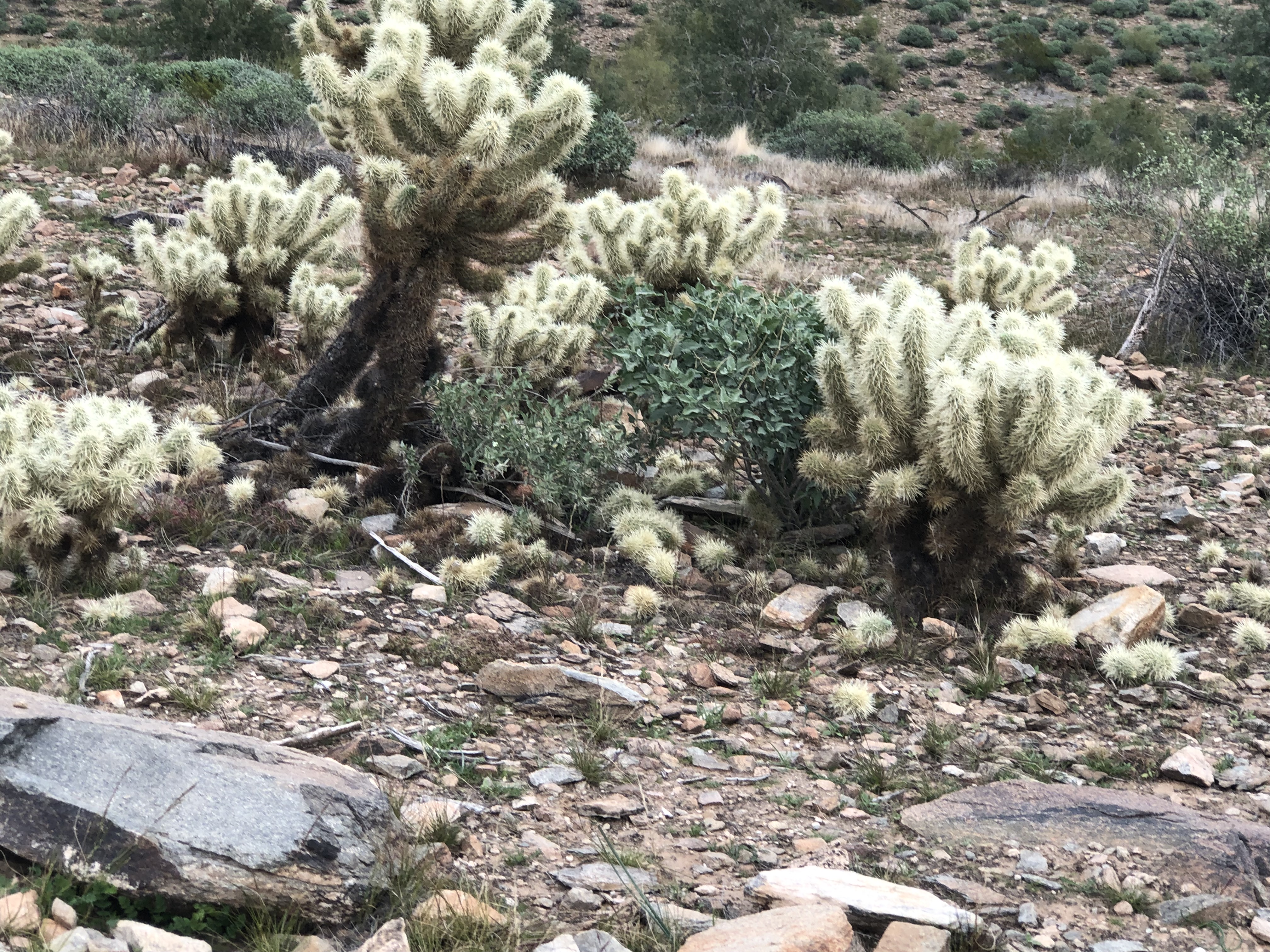

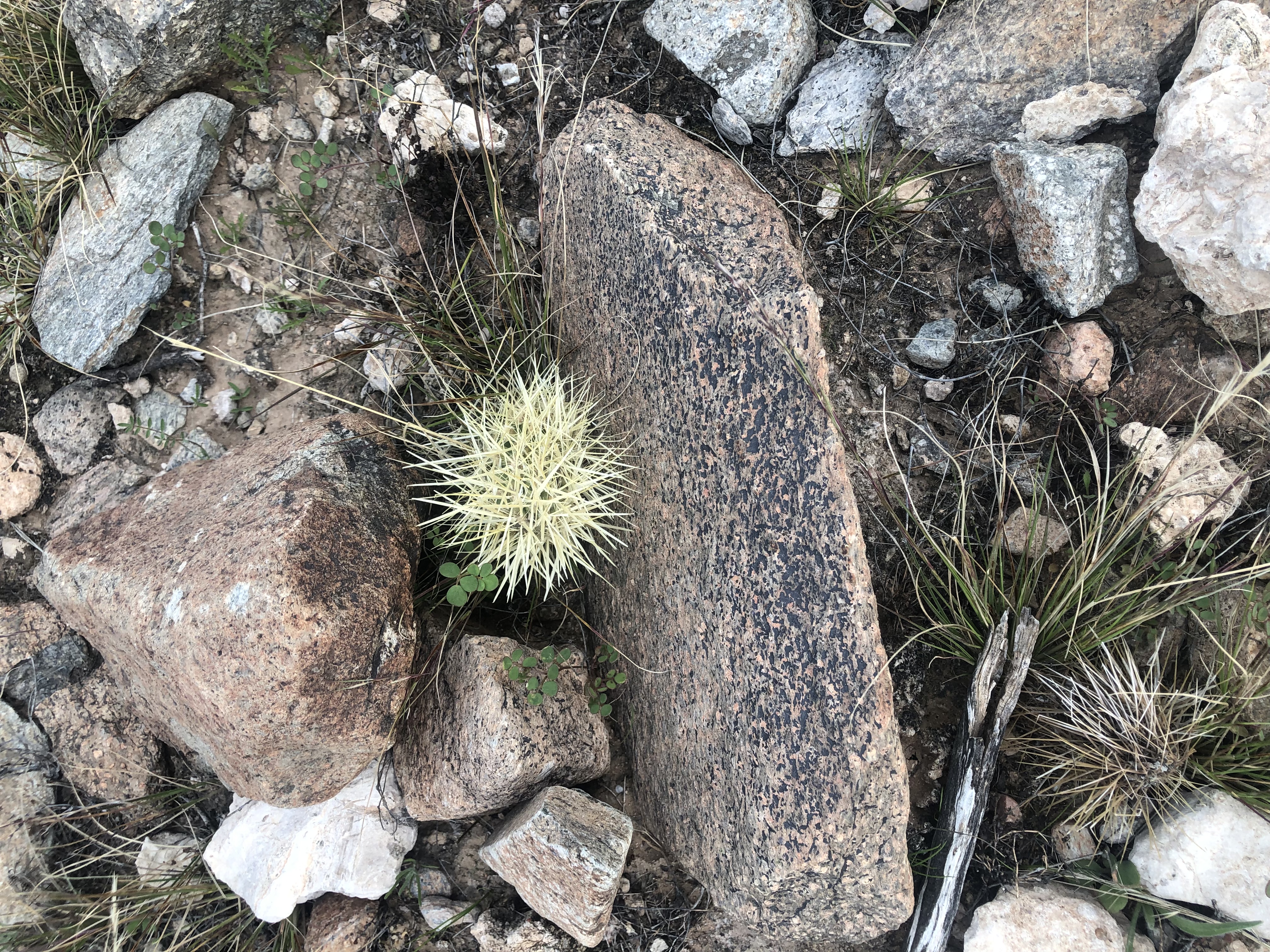
Cylindropuntia bigelovii was named after botanist John Milton Bigelow. The stems grow from a central trunk and can growth up to 7 feet tall and 4 feet or more wide. Most of the ones that I encounter around trails are less than 4 feet tall. The barbed spines range from white to dark brown/black and are often so dense that you often cannot see the green stem. Older plants have dark brown to black spines lower on the plant, with the trunk also appearing brown or black, and the top of the plant has white to yellow spines. Small stem segments readily detach from the plant (the ‘jumping’ segments mentioned above). You can see them strewn about the ground below the plants in my pictures. Sometimes after a storm you can see piles of them moved by wind or water down a slope and caught by rocks or other plants. Below I have a couple of pictures of single stems that are caught in a little circle of rocks. I cannot tell if they are newly resting there or if they have taken root (I wasn’t going to touch either of them to find out!). This plant flowers April to May, with white to yellow-green flowers. I have not seen this one flower in person, so I will make sure this spring to head out to find them in flower and get some pictures to share. They have clusters of green fruit, and I will be trying to get pictures of those too in the upcoming months.


Some notes to be aware of:
- There are multiple species that have been nicknamed the jumping cholla – beware of all of them. They were called that for a reason. If you see a cactus that looks like a segment or ball might detach, don’t get too close.
- Watch yourself and pets when hiking trails that have jumping cholla close to the path.
- If you have pets, they can also be victims of the teddy-bear/jumping chollas. Keep pets away from these plants when hiking. One of their distribution methods for reproduction is to stick to the fur of animals and be carried away to take root at another location, so they are good at sticking to fur and animals.
- Keep loose clothing away from the plants. In cooler weather I have a hoodie tied around my waist in case I need it. If you do this make sure that swinging sweatshirt does not get close enough to snag a cholla stem and then swing back to embed it in your leg!
- A breeze may feel great in sunny Arizona, but watch out for the stronger winds when hiking, as these spiky balls are light enough to be blown around by the wind.
Enjoy your hikes and remember, no hugs for the teddy-bear chollas!

 Michelle Rambles