
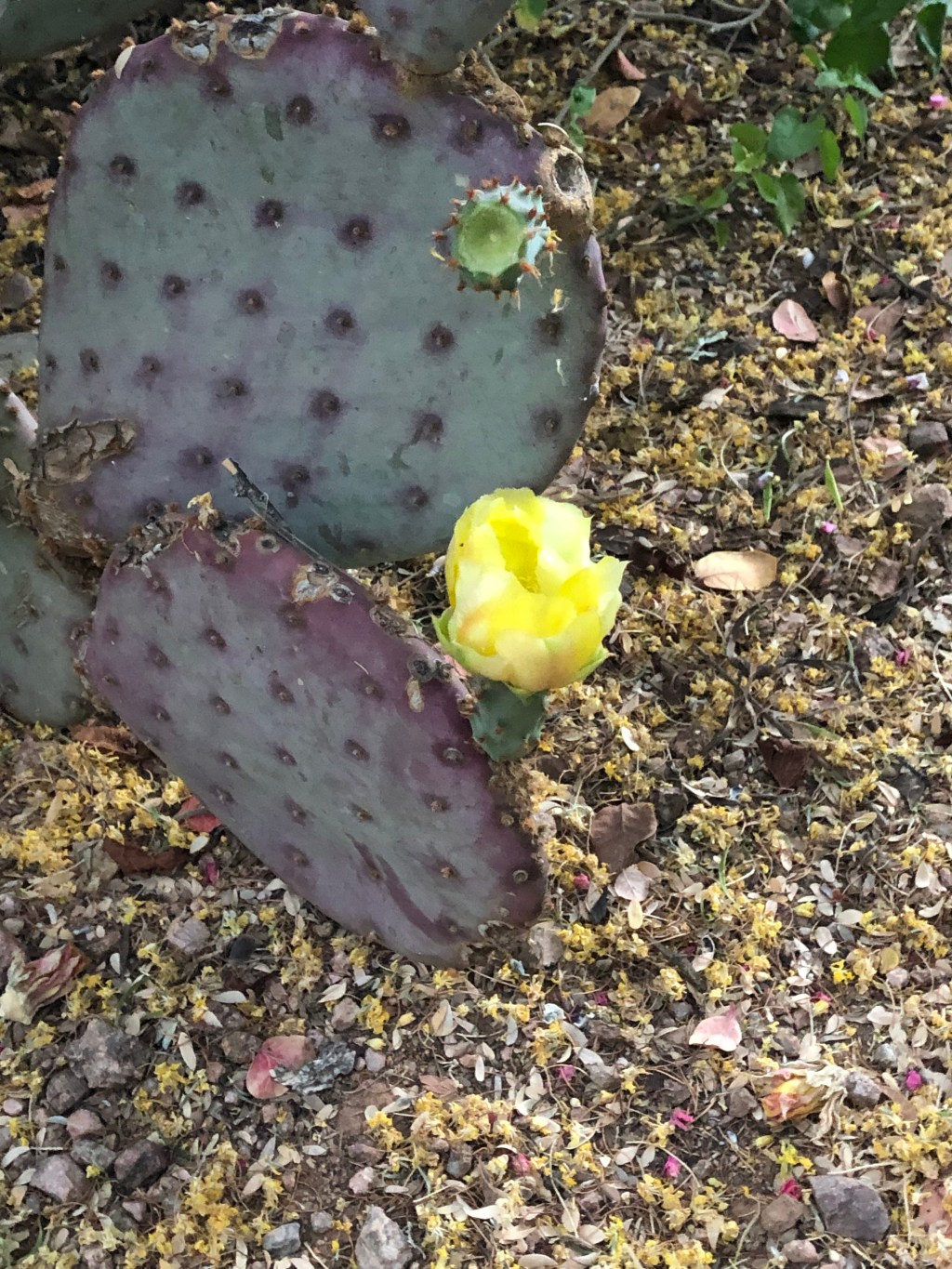
The cactus of the week is the prickly pear, which I see all over Arizona, in both landscaping and in the wild. However, the prickly pear is not just one cactus. There are many cacti in the Opuntia genus just in Arizona, and even more that are not native to my state. Most of you likely have seen a prickly pear in some form – in person, in art and photographs, in books, or on restaurant menus. In general, prickly pears have flat, paddle-shaped stems (they range from more rounded to more elongated, such as the beaver tail and the bunny ear prickly pears). Some of them have no spines or are only half-covered in spines, while others have many spines that are inches long. I haven’t talked about glochids before, but prickly pears often have them even if they have no central or radial spines. Glochids are small spines that emerge from the areole at the base of the larger spines. They often appear as fuzzy tufts close to the areole but actually have tiny barbs. I discussed the cholla and their barbs last week. The cholla, along with the prickly pear, also have glochids, but they are especially predominant on the prickly pear. These tiny clumps of spines do not look menacing from afar. I think it is even tempting to reach out and brush your hand across them to see if they are soft. Do not do that! They have reverse barbs that will get stuck and be painful to remove. Think of hundreds of miniscule fishhook barbs stuck in your skin – a good reason to avoid them.
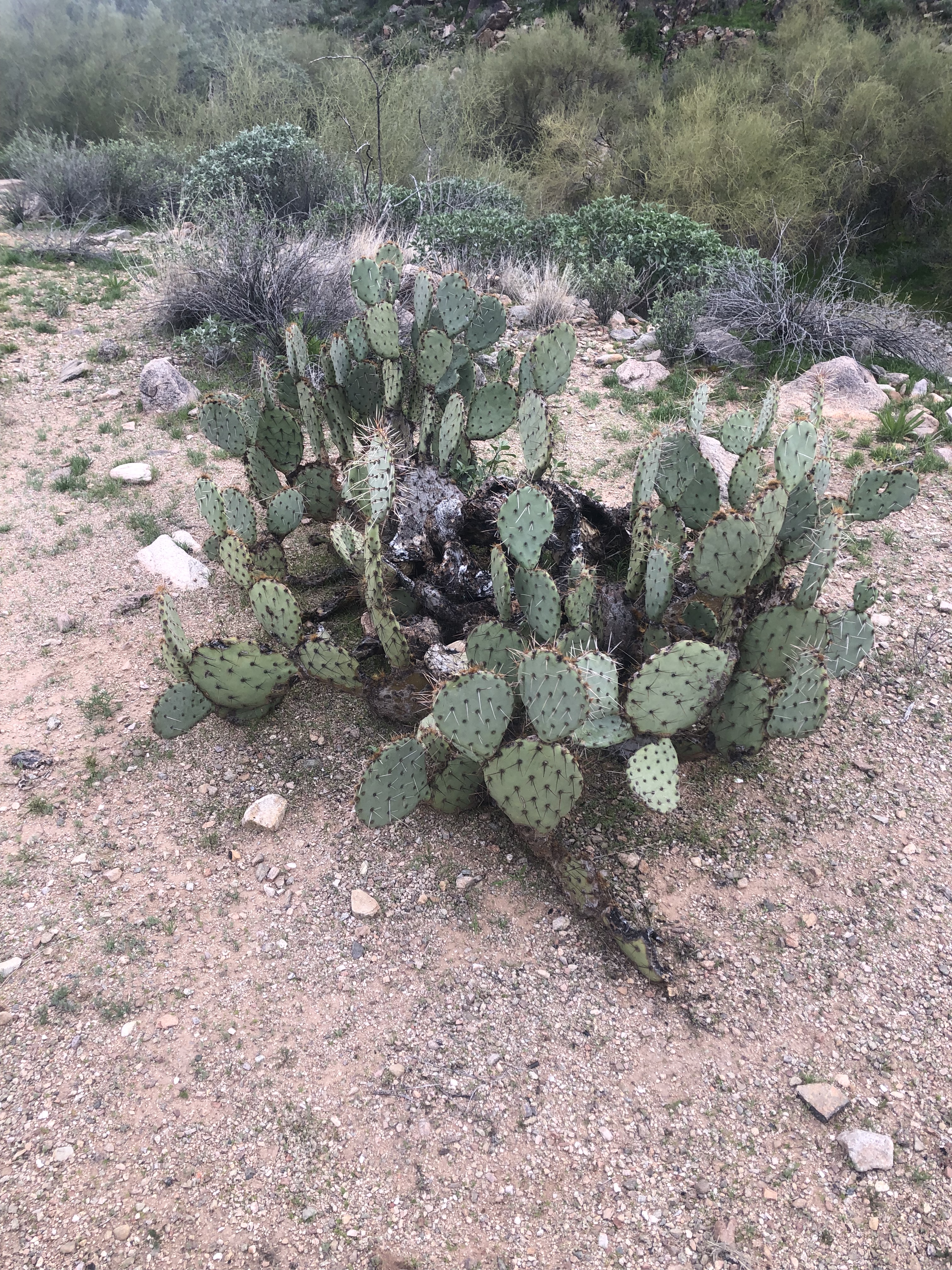
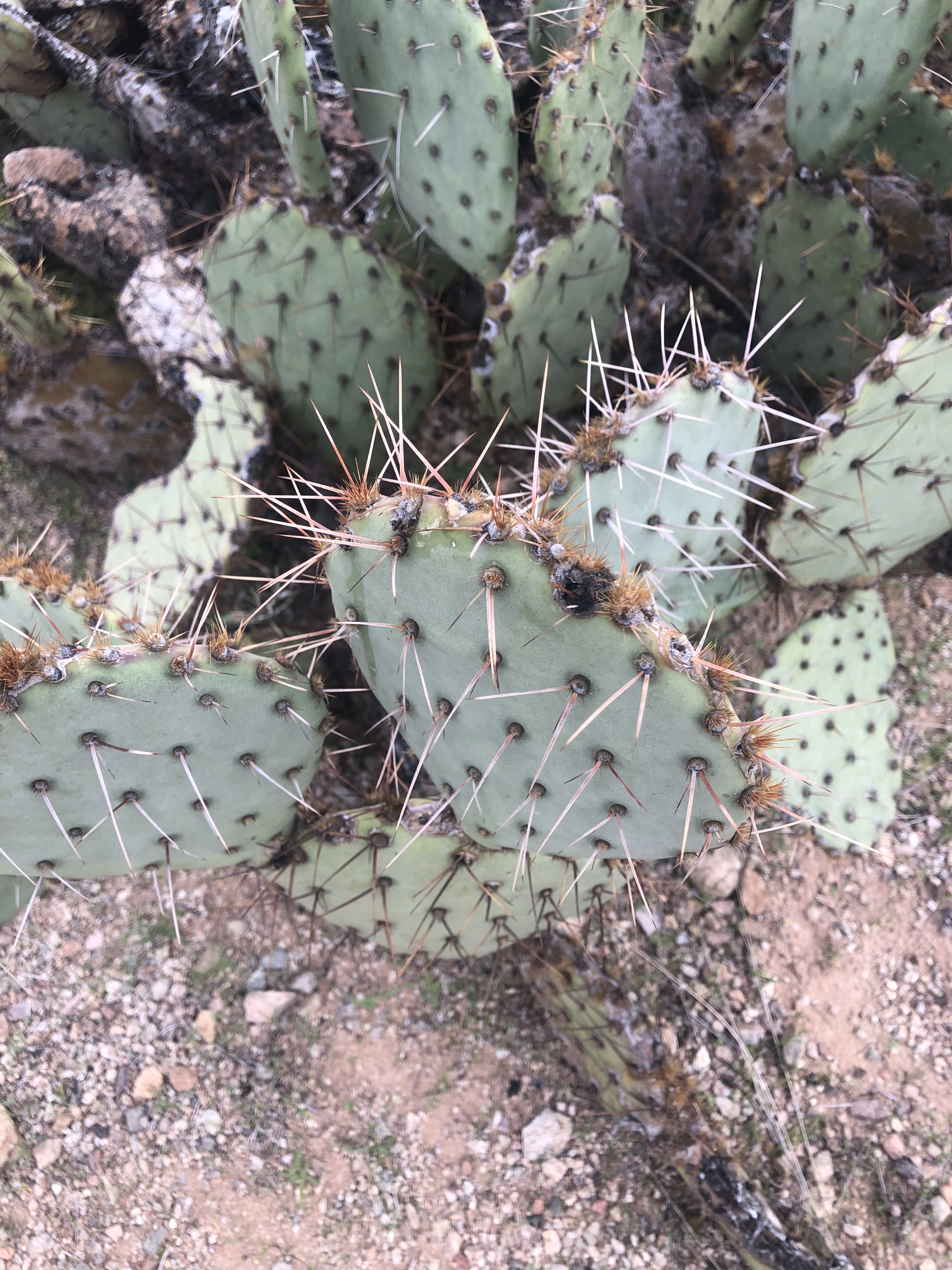
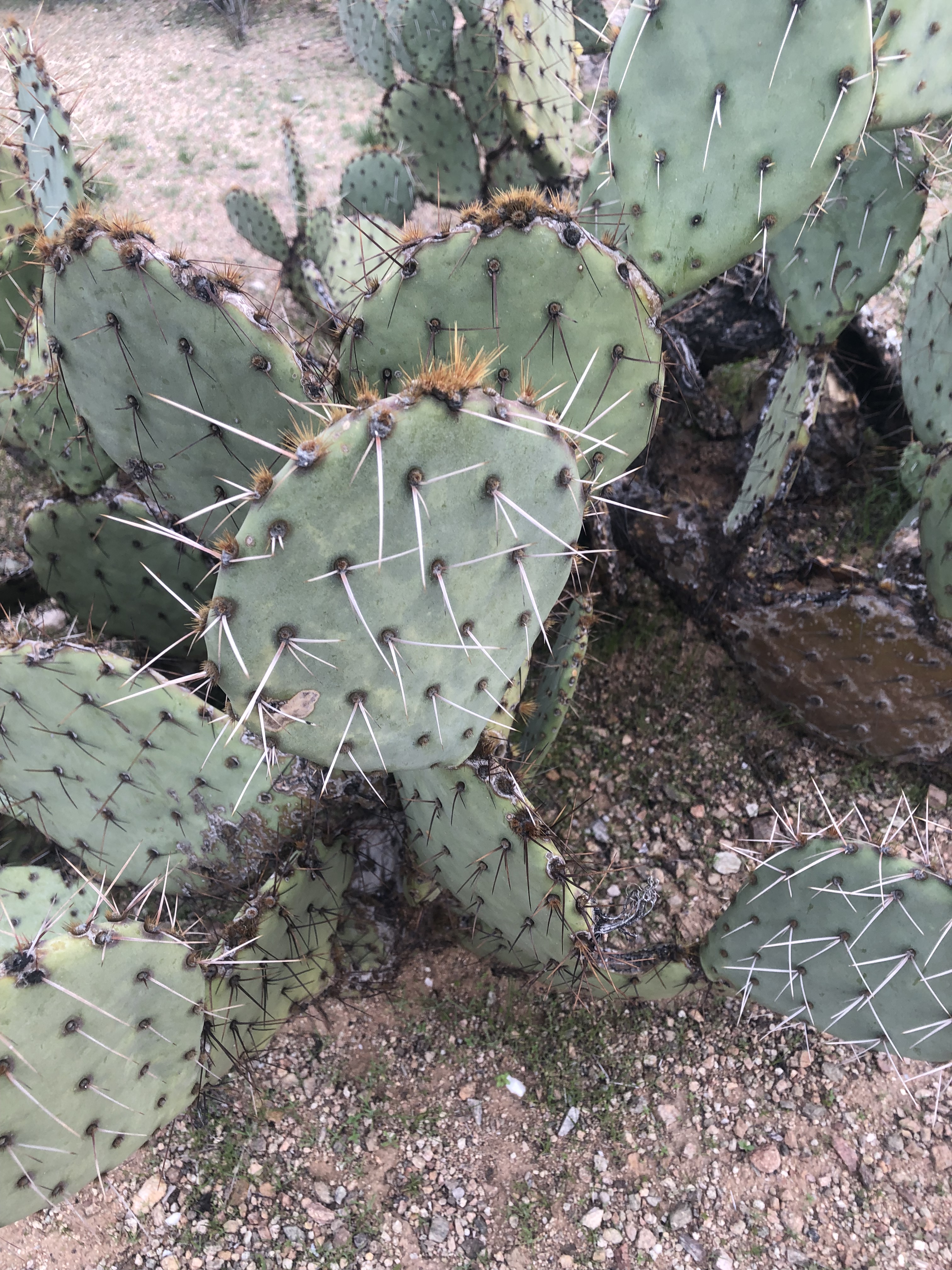
I mentioned that you might see prickly pear on a menu, and you might also find recipes for fixing prickly pear yourself, but beware of the glochids and read up on how to prepare the cacti during food prep so you do not find yourself stuck.
This website from the Master Gardeners of Northern Virginia has some great pictures – if you click on the individual pictures, you can see close-up views of glochids on different prickly pears. https://mgnv.org/plants/glossary/glochid-spine/
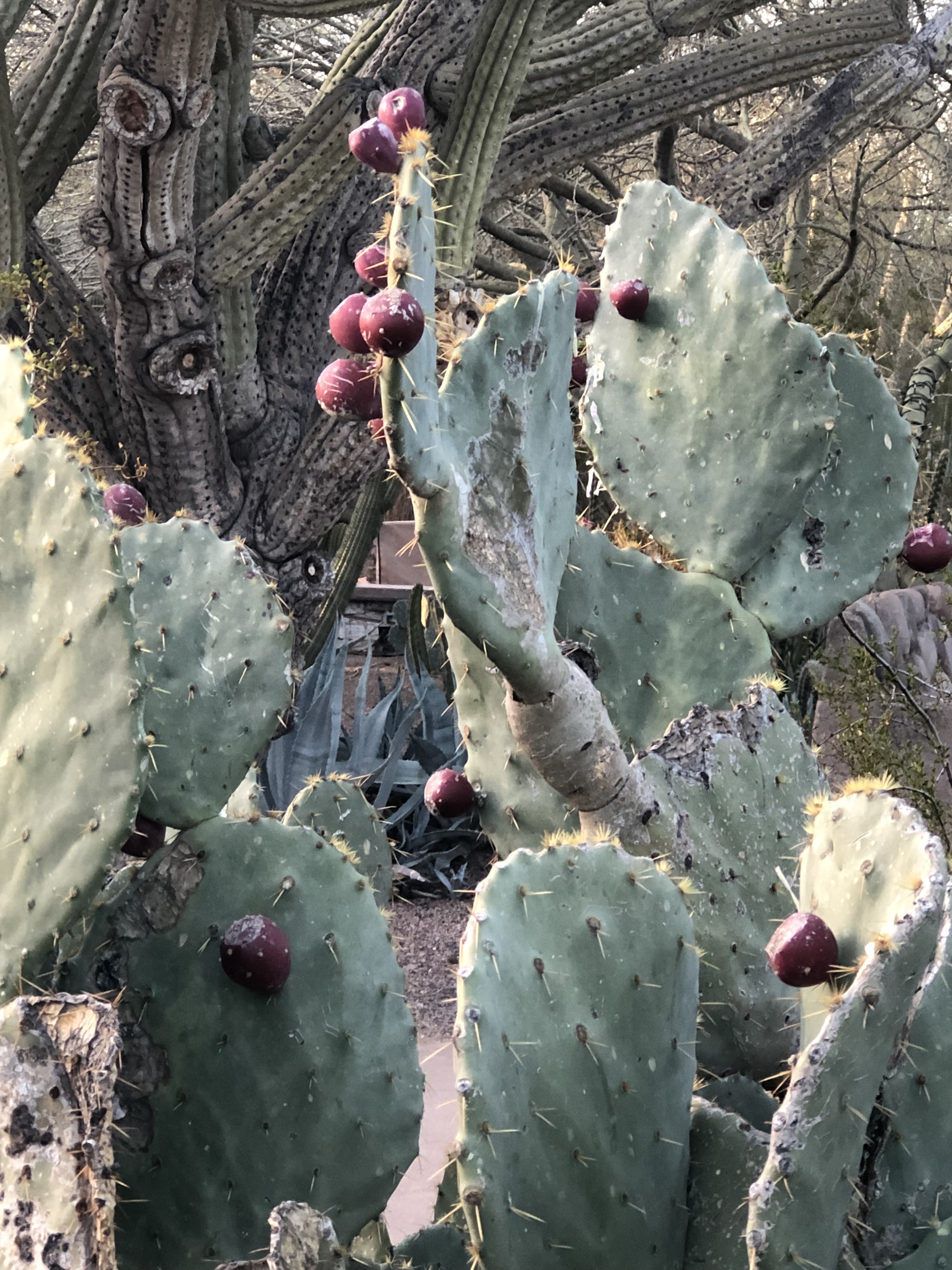
Check out this website from the Nevada Extension Office that gives information on preparing the prickly pear to eat. https://mgnv.org/plants/glossary/glochid-spine/ Both the stem (pad) and the fruit can be eaten, but both have glochids and need to be handled with care. The bottom of the page has some recipes if you want to try it. The fruit can be juiced, and I have seen prickly pear margaritas on menus. In the picture below you can see some of the red fruits on the prickly pear. They are fairly large, as are the flowers, which are often yellow (see picture below) or pink, depending on the species.
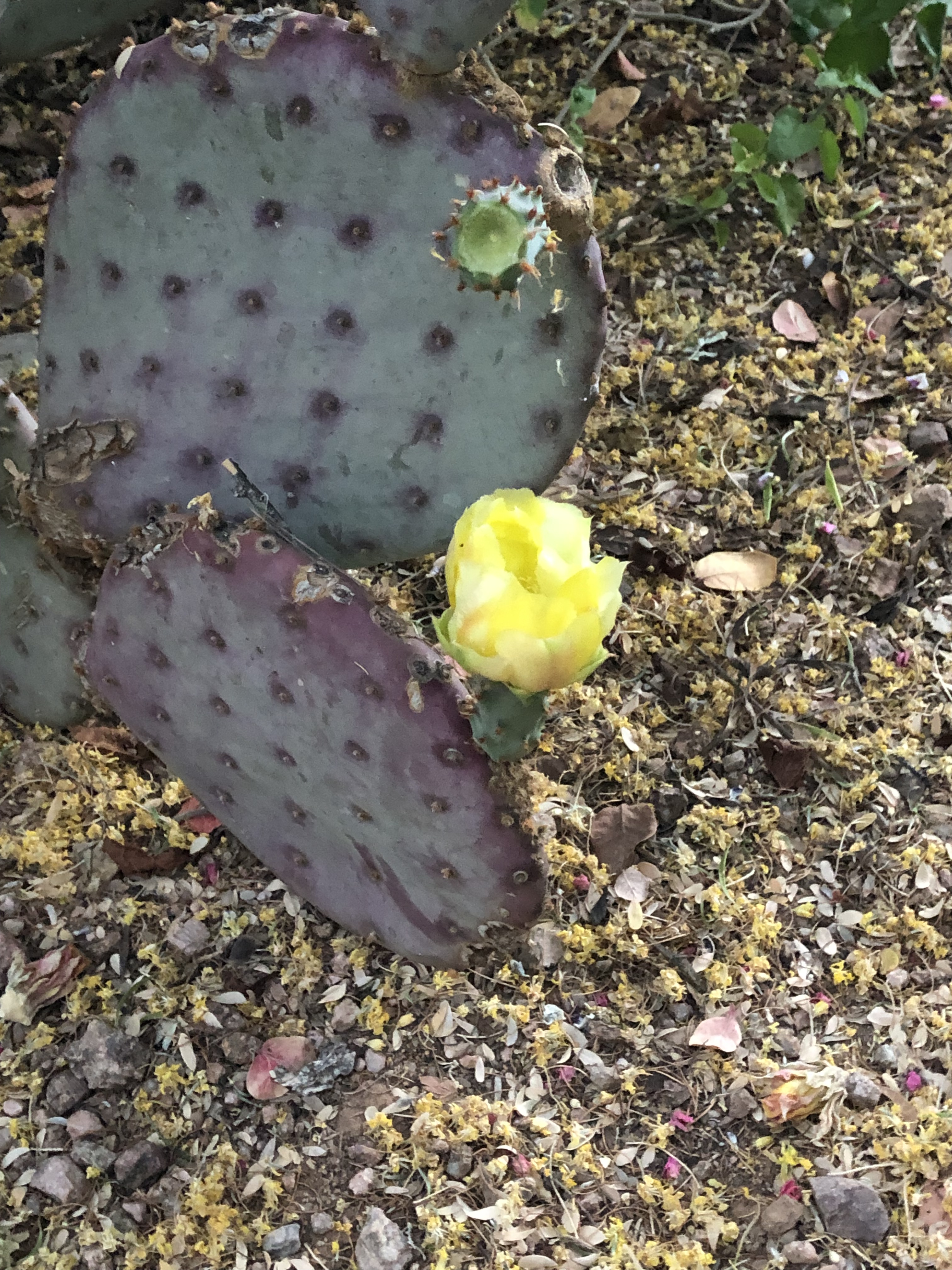
There are many species around Arizona and across the US, and I am not going to make much of an attempt to speciate the ones in my pictures because prickly pears readily hybridize, which makes exact identification difficult for an amateur. Also, I think it is a little tricky because I am pretty sure that some of the prickly pears that are used in landscaping in my area are not native, so you will see some in town that you won’t see along the trails.
Going alphabetically, Opuntia chlorotica is found in a large part of Arizona and in multiple other states and Mexico. These are unique because the stems branch from a single trunk, so they take on the look of a small tree, ranging from 4-7 feet tall. I don’t think I have seen one of these on my walks, so I am adding it to my list and will post a picture when I find one. The flowers are yellow, and the fruits are red.
Next up is Opuntia engelmannii, which is also widespread throughout Arizona and the Southwest. This one spreads more across the ground, anywhere from 3 to 10 feet high and 8 feet wide, with yellow flowers and red fruit.
Opuntia phaeacantha is another example that is abundant in Arizona, and also New Mexico, with lesser distribution in other southwestern states. This one is also a low-growing plant and only gets up to 3 feet tall and spreads as wide as 8 feet. I think O. engelmannii and O. phaeacantha look very similar and both hybridize with other prickly pears. One difference is that the flowers of O. phaeacantha have a red interior.
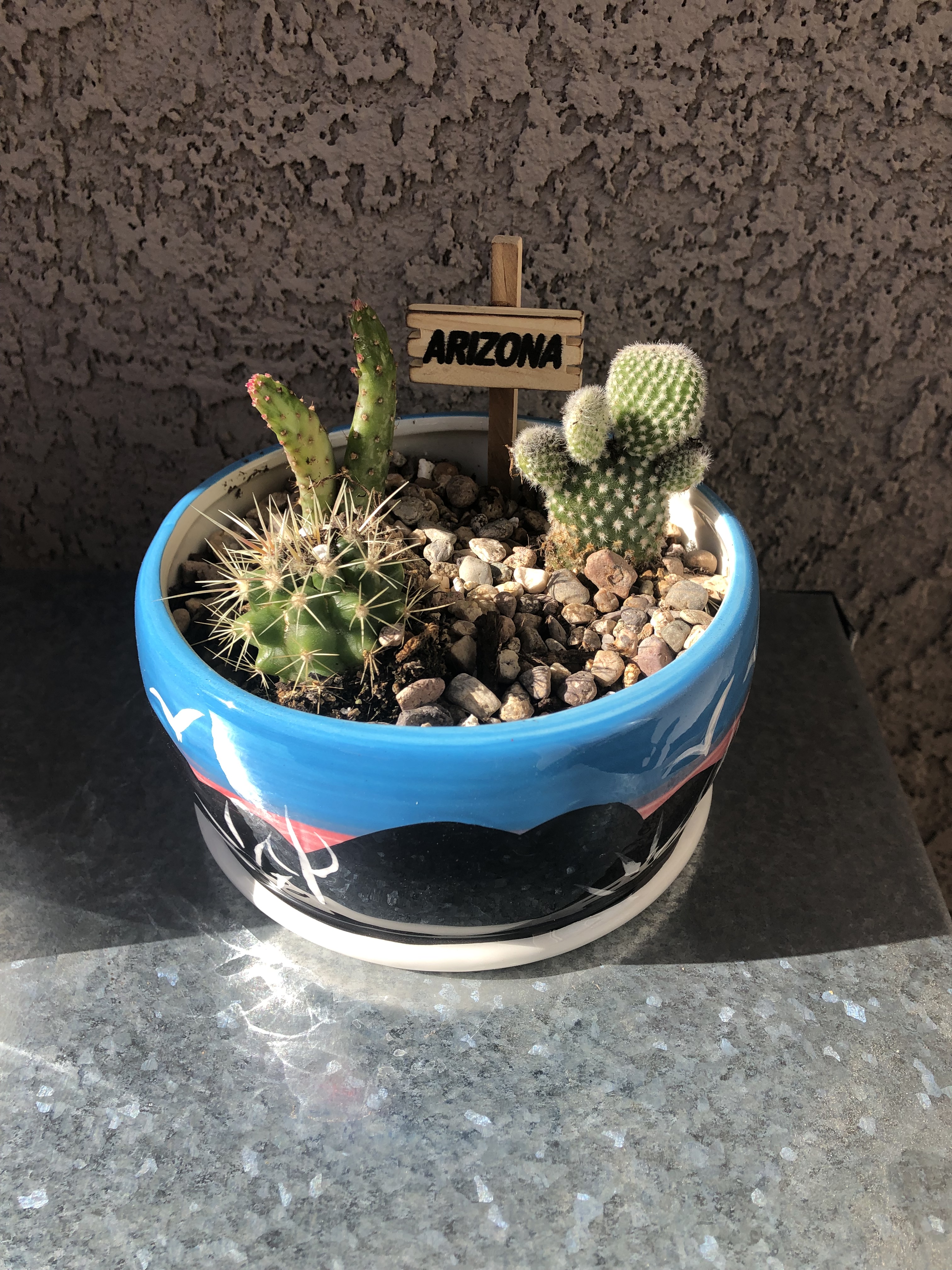
I am including a picture of a cactus garden I bought at a touristy shop in Jerome, AZ April 2022. The plant on the far right is one of those prickly pear plants that I don’t think is native to Arizona, and has the fuzzy, deceptively non-threatening appearance. This picture is when I first potted them. They have since grown large enough that I removed the ball cactus from the pot and left the other two. I will post more pictures of the cactus garden progress in another post. Maybe that will be next week’s Cactus Corner. See you next week!
Feel free to post in the comments if you have eaten or cooked with prickly pear. I would love to hear your experience.

 Michelle Rambles