Recently I attended the monthly meeting of the Tucson Cactus and Succulent Society (TCASS). The meeting began with information and announcements as people were still coming into the room. The president told a plant joke that I didn’t get, and most people laughed. I love a good nerdy joke, and I hope to attend enough meetings to understand all the jokes. I did get the next plant joke, so maybe I am halfway there. I laughed at the joke, but the topic was no laughing matter – conserving saguaros. A large part of the mission of the society is conservation and education. According to the National Park Service, it can take 10 years for a saguaro to grow one inch (link below). When they are little, they are vulnerable and may not survive. They are also at risk of removal during development. TCASS already has a plant rescue program – developers and builders can request the society bring a team to relocate cacti and other plants. Now they have started a foster program for tiny saguaros and other plants. People can take them home and take care of them and eventually they will be planted in the wild to help increase the saguaro population. I think this foster program is not just for saguaros, but increasing the population of saguaros seems to be a main goal.
They are also participating in a program to plant more agave plants around Tucson in support of the Mexican long-nose bat and lesser long-nose bat, which migrate through Tucson every year. The Mexican long-nose bat is endangered, and increase in agave plants supports their nutrition and survival. According to this website, they plan to plant a million agave plants over a 10-year span. Important work happening in southern Arizona, New Mexico and Mexico to protect our little bat friends.
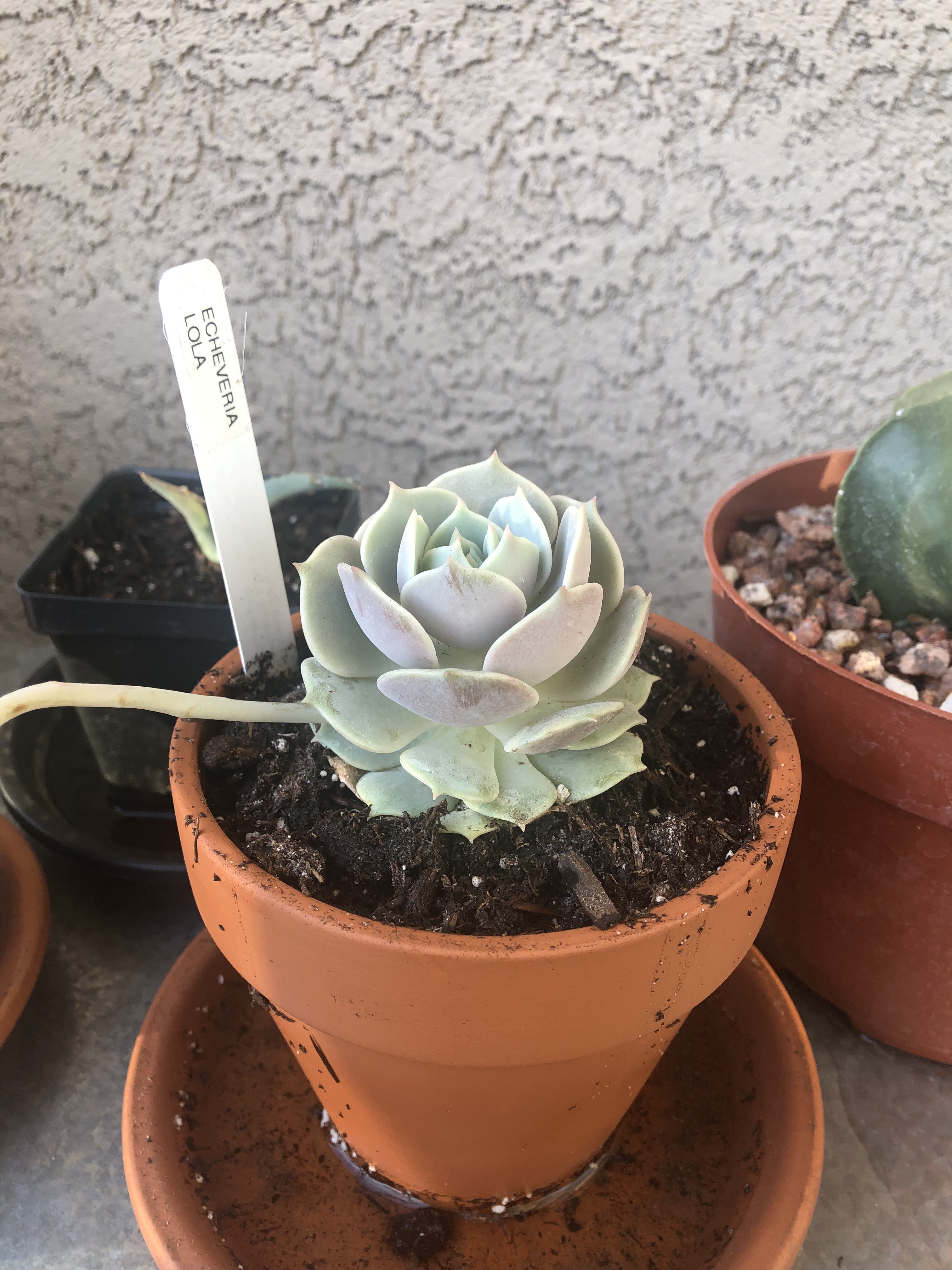
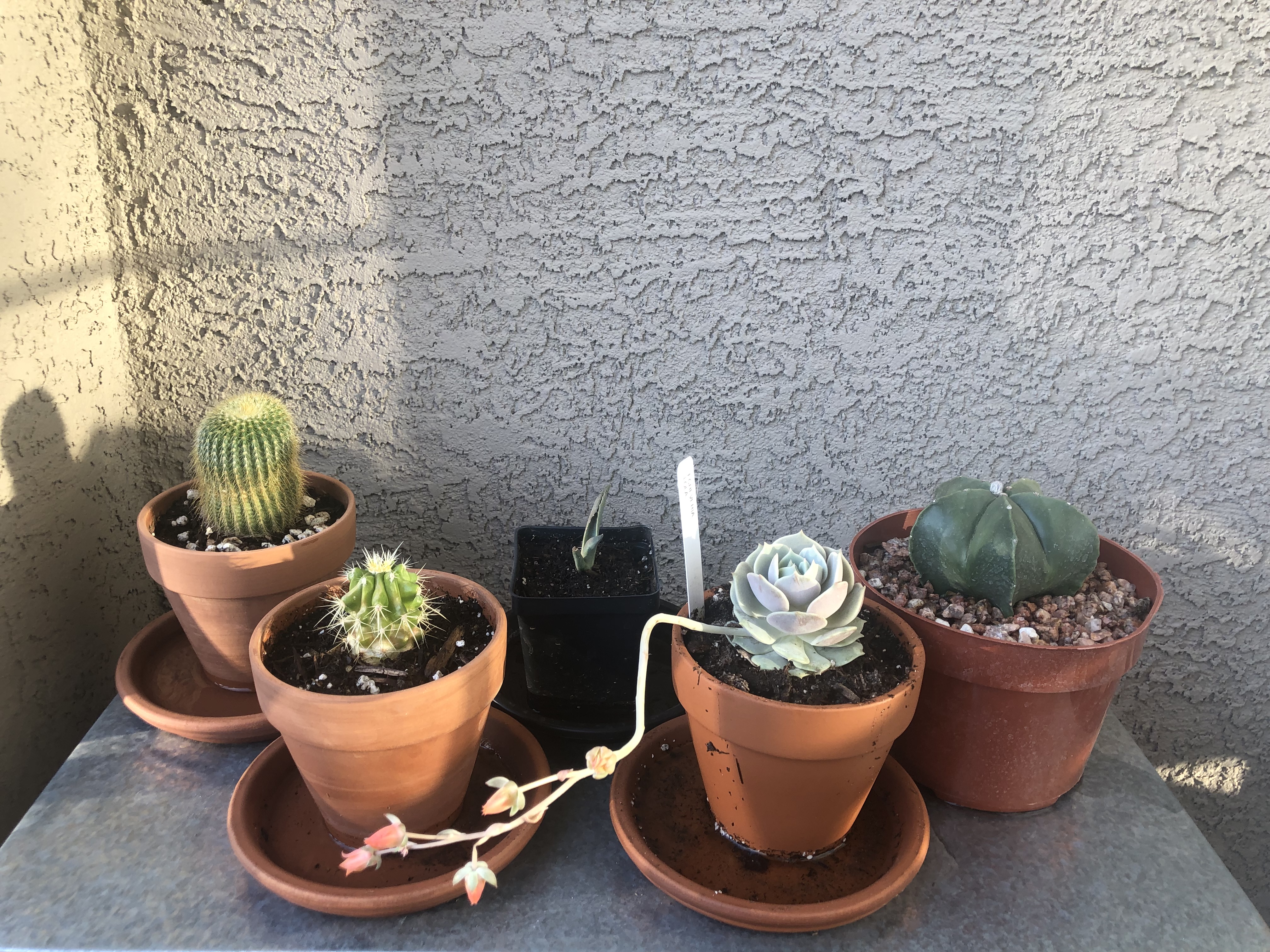
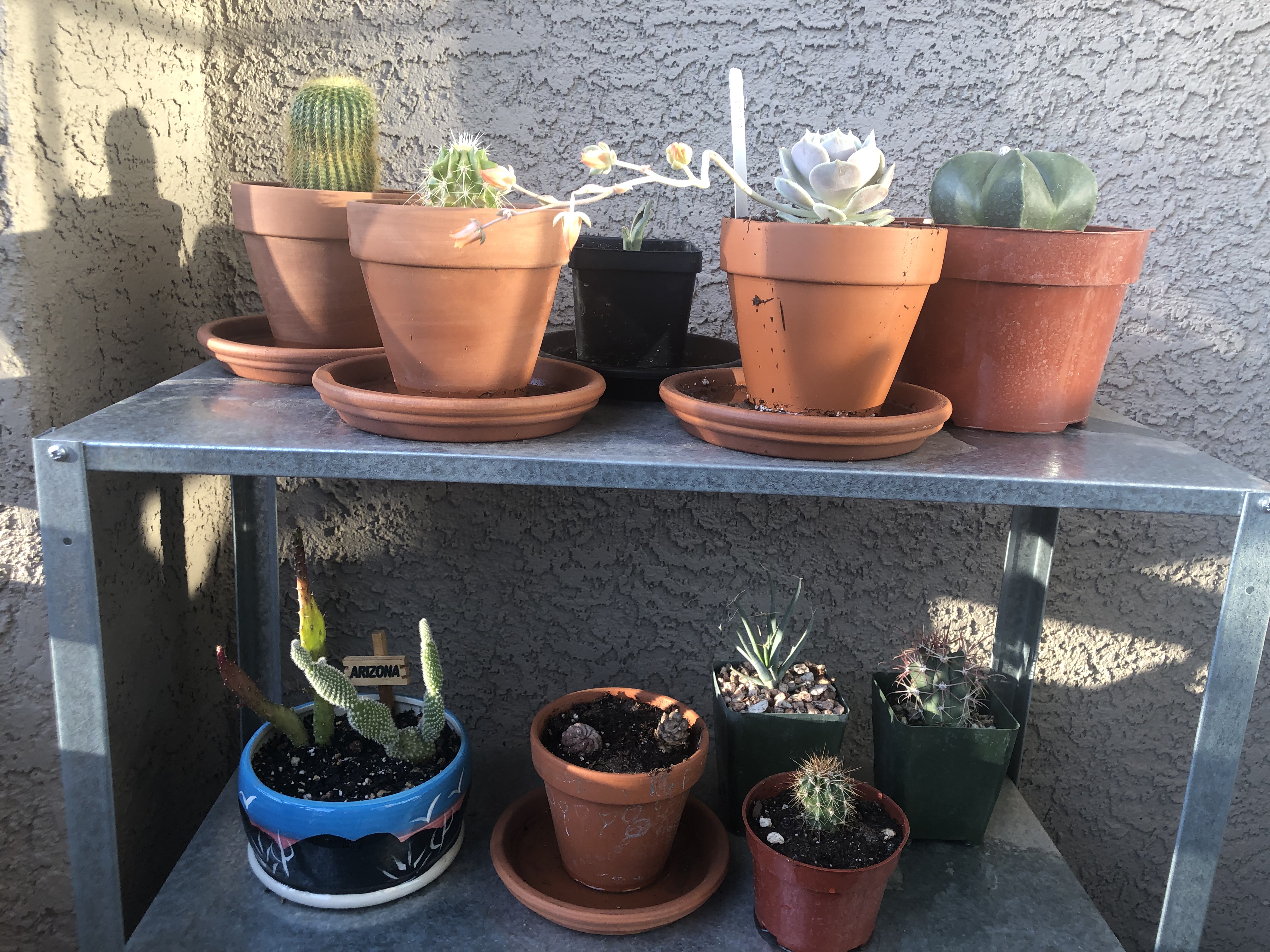
The topic of the talk for the evening surrounding growth conditions for cacti and succulents. I have started a small collection on my balcony, and each of the cactus society meetings includes free plants (this time I got a succulent that is currently flowering – see the picture below!). I have been researching plants, but not necessarily the best growth conditions, so I was looking forward to the lecture. The horticulturalist, Marcus White, owns a nursery south of Tucson and talked specifically about what he does at his business and how it relates to home gardeners. My main question was about soil. I have always just used Miracle Grow potting soil for plants, but I bought a traveling cactus (more about that at the end of the post), and it said to mix 50% sand and potting soil. I have not been able to find large amounts of sand, so I bought a small container at the craft store and used it all quickly. The next potting soil I bought was the same brand but specifically for cacti. I didn’t have any sand so just used the potting soil. So I haven’t been sure if I am using the right stuff, and if I should be adding more to it.

Mr. White listed a variety of components that can be included in the soil, from sand and bark to pumice and composted yard waste, and much more. He indicated that the mixture should change based on pot size. For example, seedlings would need a different mixture than larger cacti and potted trees. The sand provides space for air, while a substance like clay is very dense and does not allow much air in the soil. Larger components like bark and pumice stone are important for drainage. He also talked about fertilizer options, carbon-nitrogen ratio, and pH, but not in-depth – there is a lot of research that could be done here for the serious gardener, especially if you are planting in the ground. I am not going that far into the weeds since I am only growing small plants in pots. I still have questions about watering – I think I was not watering enough because I was afraid of over watering. I am watering more and have not seen any detrimental effects.

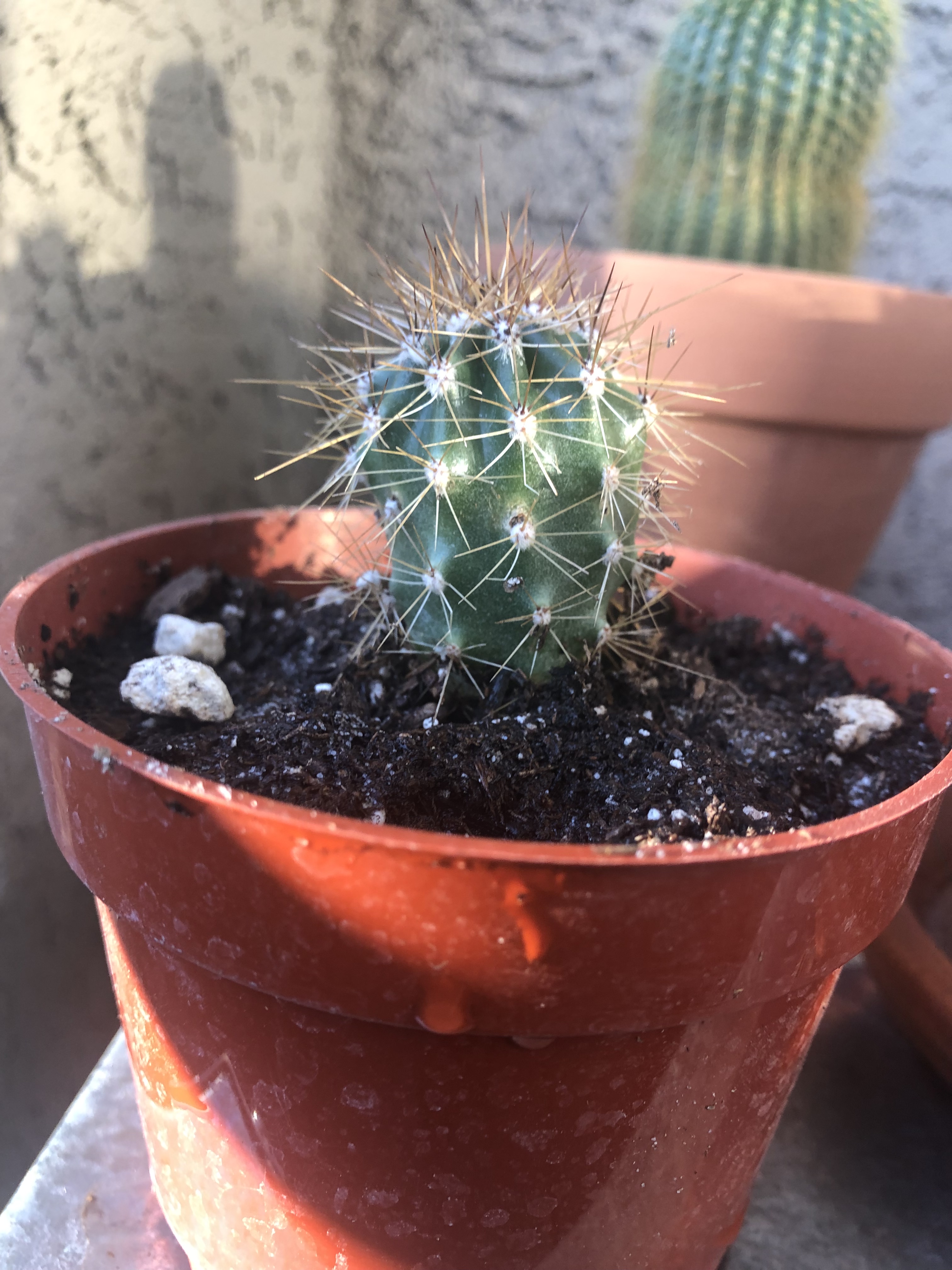

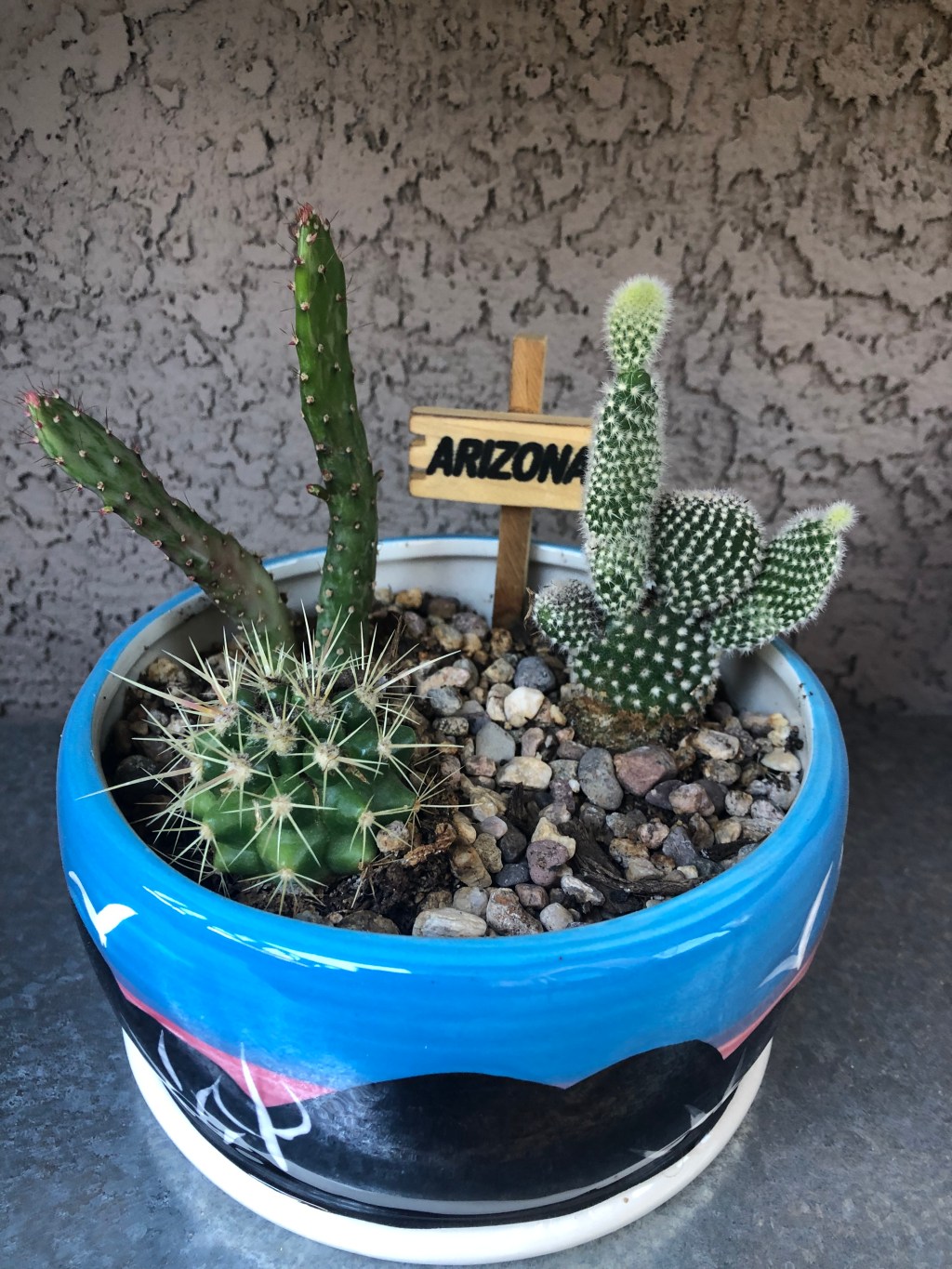
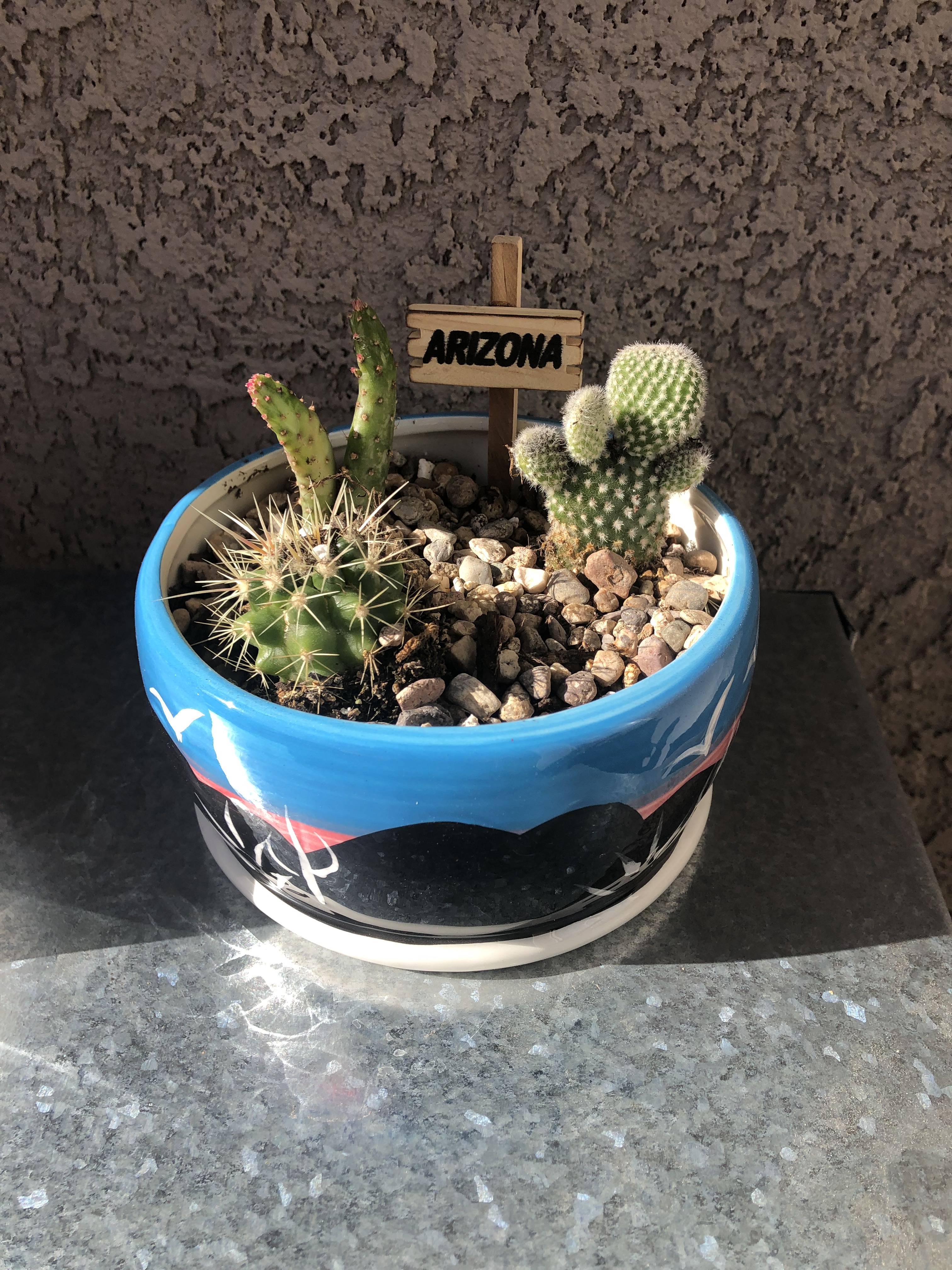
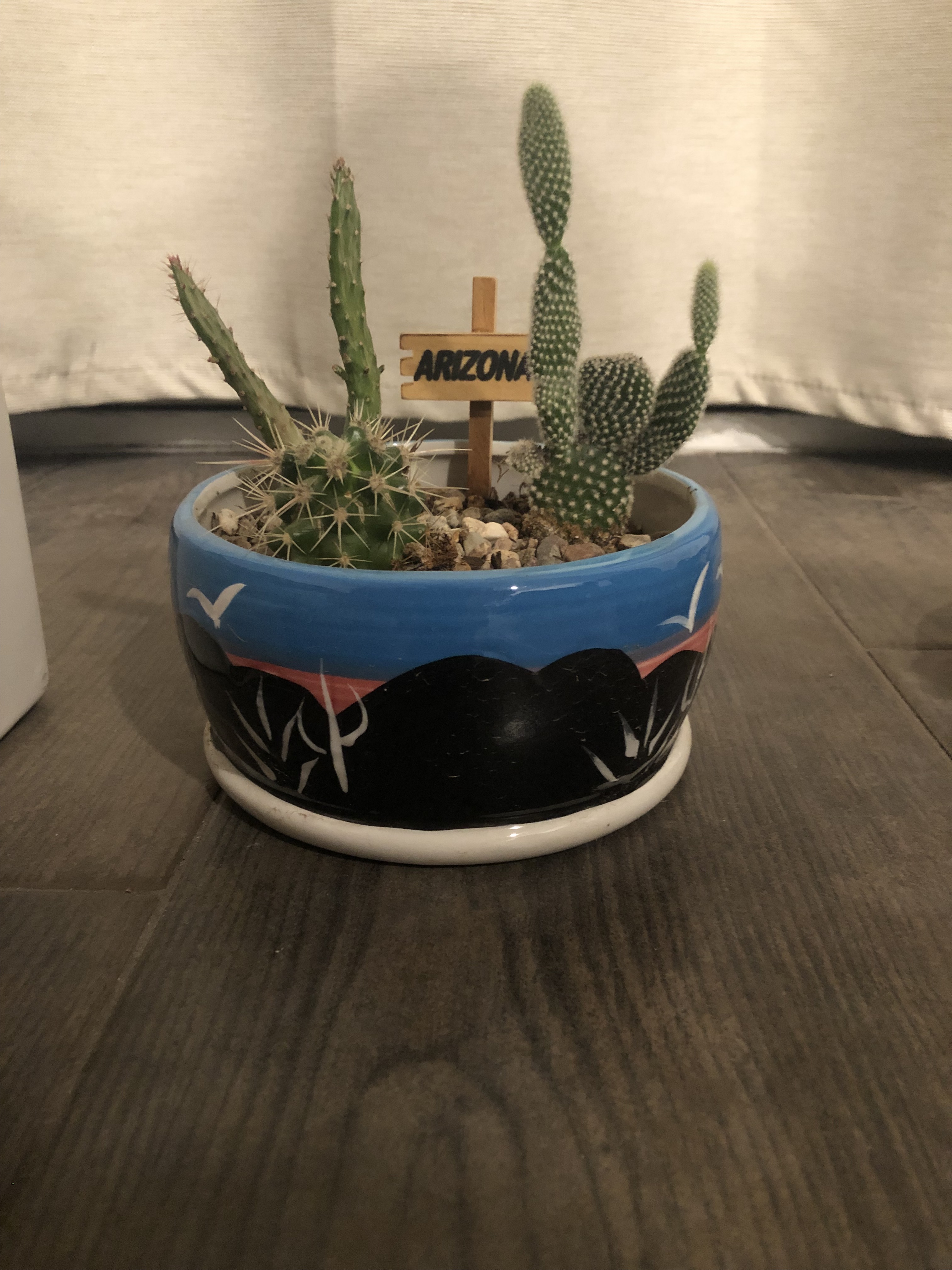
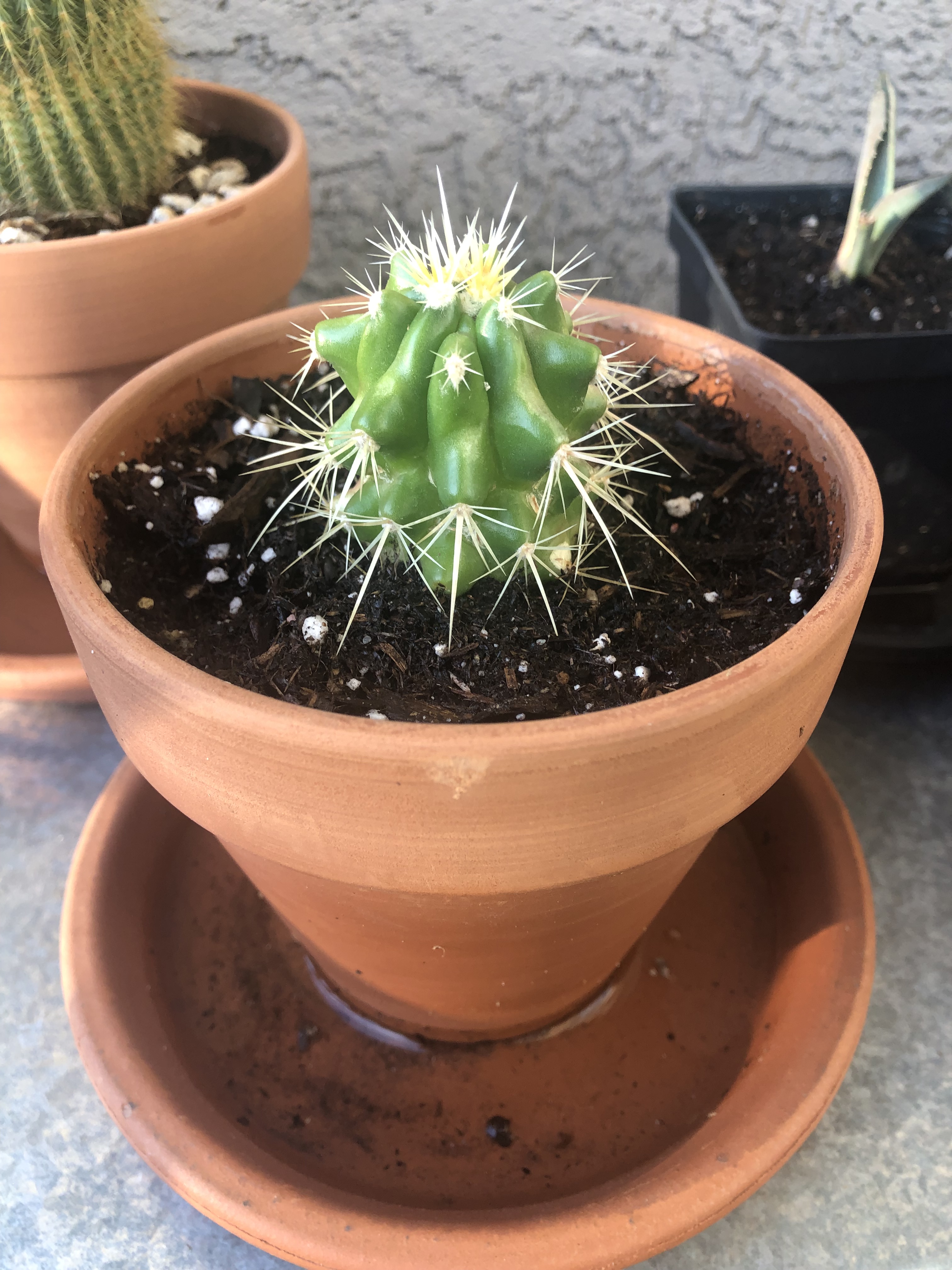
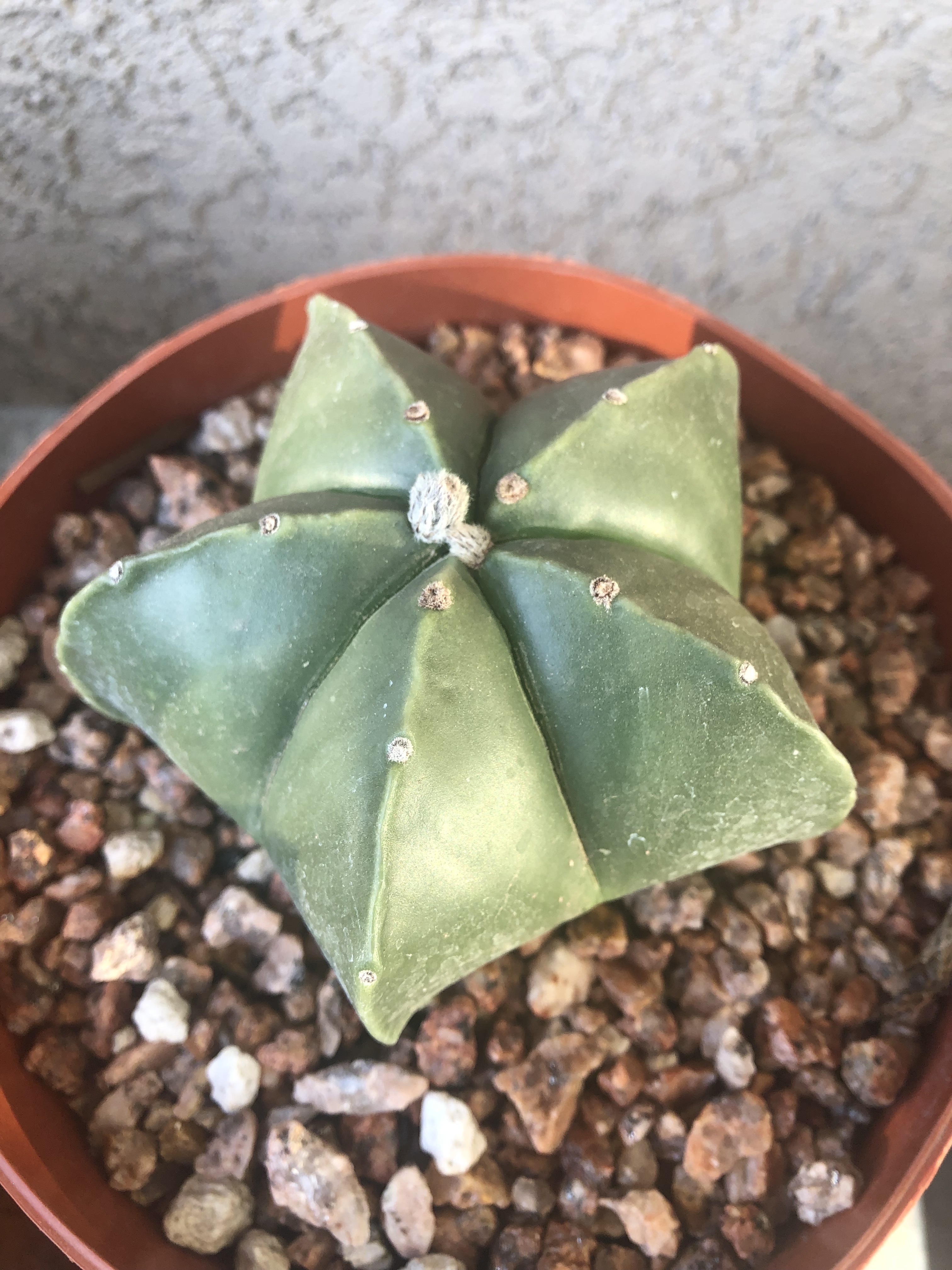
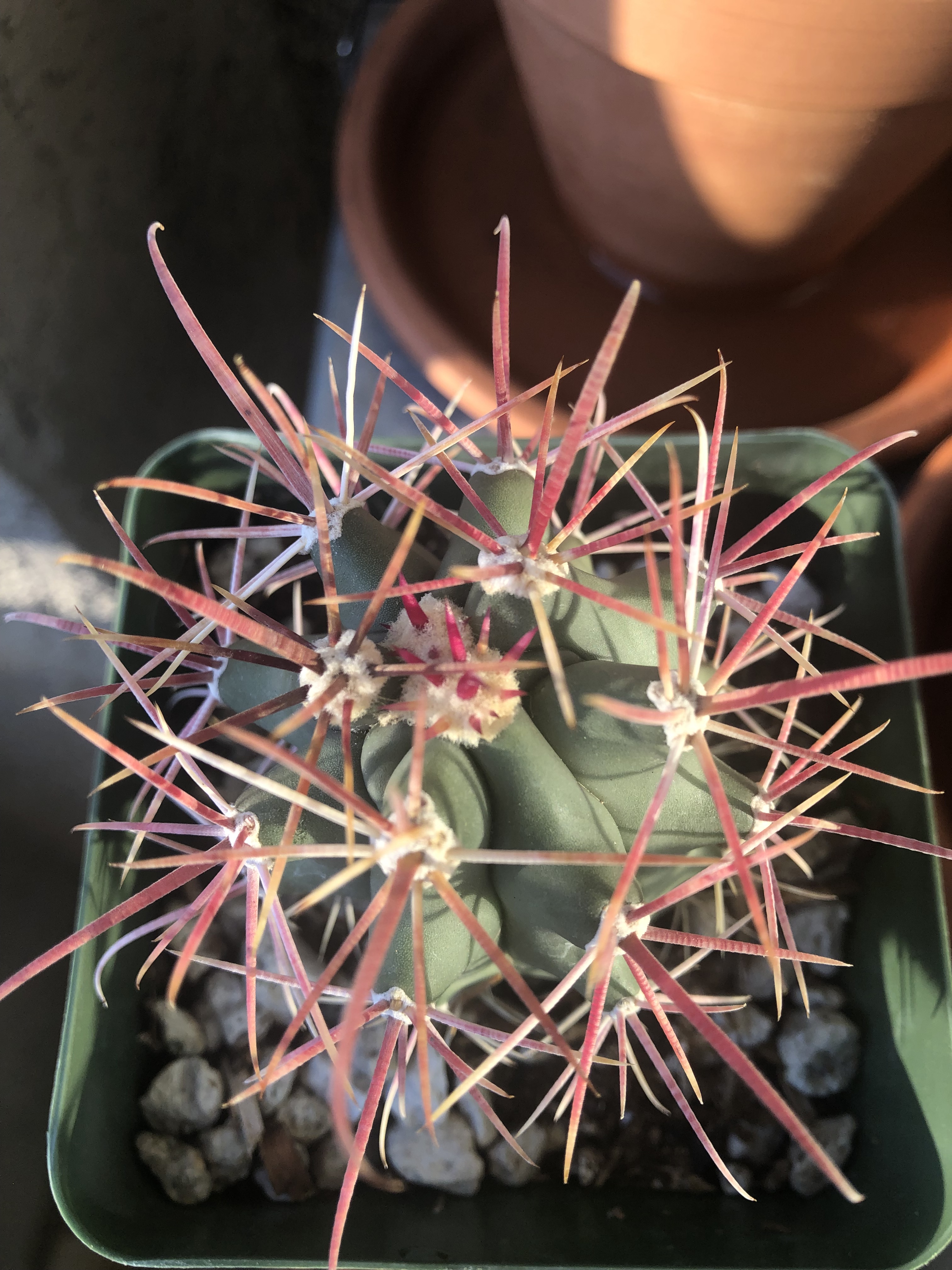
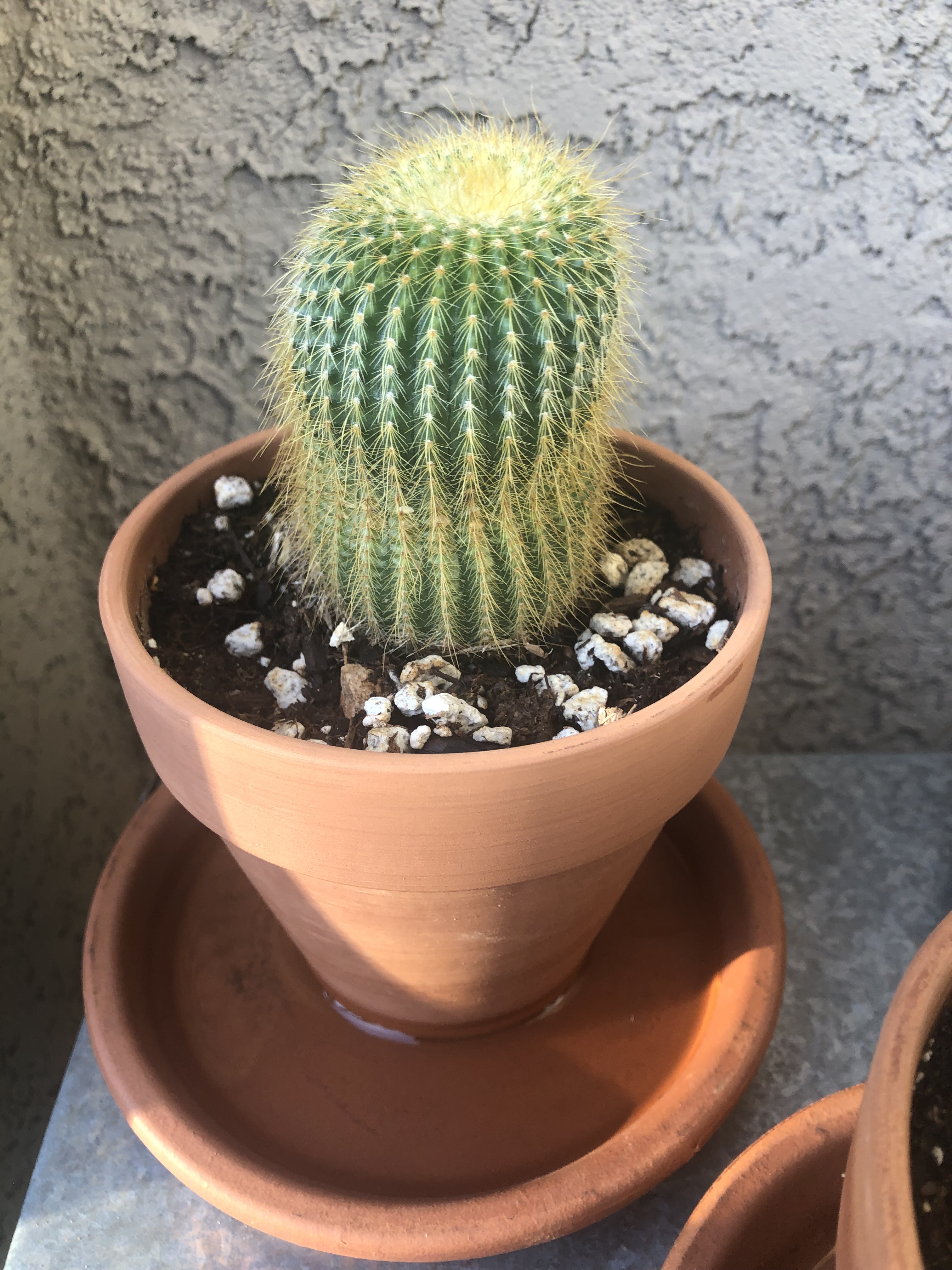
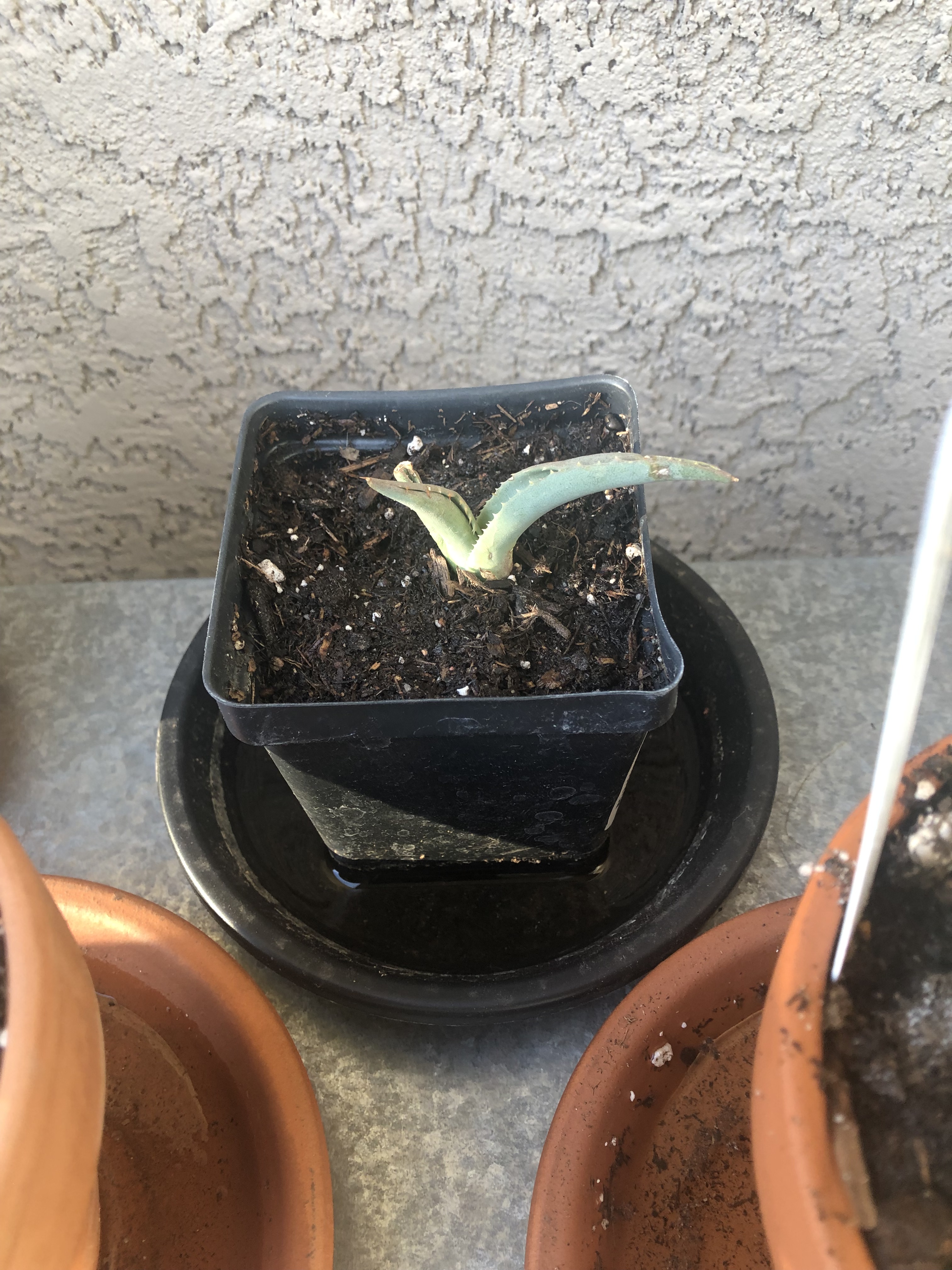
Speaking of my collection, last April was my first purchase – a traveling cactus garden. I was unfamiliar with the concept, but it is a cactus garden in a box. It has three little cacti, a planter dish, soil and rocks, and a little ‘Arizona’ sign. I bought it at a tourist shop in Jerome, Arizona. The idea is that it can be closed up in the box for several days and travel home with you from your vacation. Mine has a prickly pear, a ball cactus, and one that looks like rabbit ears. I am not sure what the rabbit ear one is, but it could be a type of prickly pear – there are a few that look like rabbit ears and badger tails rather than the better-known rounded paddles. Below are a series of pictures over the last year showing how quickly they grew. I have enjoyed watching them grow, particularly watching the prickly pear grow new stem segments. In November I bought a little saguaro at the Arizona-Sonoran Desert Museum (https://www.desertmuseum.org/ – if you are near Tucson, stop by for a visit – you can see plants, but also javalinas, big horn sheep, hummingbirds, and much more). I recently repotted it, and I am going to see if I watering it a little extra will speed up growth. At the beginning of January I bought four new cacti at the Boyce Thompson Arboretum (worth a visit if you are in the area – about an hour drive east of Phoenix – https://btarboretum.org/). I got a golden ball, Parodia leninghausii, which is not looking very round right now. It has a brown streak that I did not notice when I purchased it, giving it more of a columnar appearance. Maybe that was why it was on the sale table, or maybe I didn’t water it enough. This cactus is native to South America, will have yellow flowers, and its spines appear yellow also. I picked out a prism cactus, Leuchtenbergia principis, which is native to Mexico and also has yellow flowers in the spring. This one just looked interesting and not like most other cacti I see, even in the botanical gardens. The next one is a fire barrel, Ferocactus gracilis, which is native to Baja, and has red spines and red flowers. I love the color of this one. The last purchase is one of my favorite cacti, the bishop’s cap. Astrophytum myriostigma var. nudum is a green bishop’s cap, named because when it gets tall it looks like the hat a bishop wears. This one is a shorter version, native to Mexico, and gets yellow flowers in spring. I am excited because something is happening at the top of the plant, and I am not sure what (I am hoping for a flower) – I tried to get a close up of the top center so you can see. Finally, I got three new plants at the last Central Arizona (CACSS) meeting I attended – I have no idea what they are, and the new succulent from the TCASS. I picked this one, Echeveria lola, specifically because it had a long stem with multiple light orange flowers. I am enjoying getting free plants at the meetings, and maybe one day I will have plant babies to share. For now I am content to increase my collection with the generous extras of my fellow members. I will keep everyone updated if I get flowers on the bishop’s cap! Until next time, happy gardening!





 Michelle Rambles