
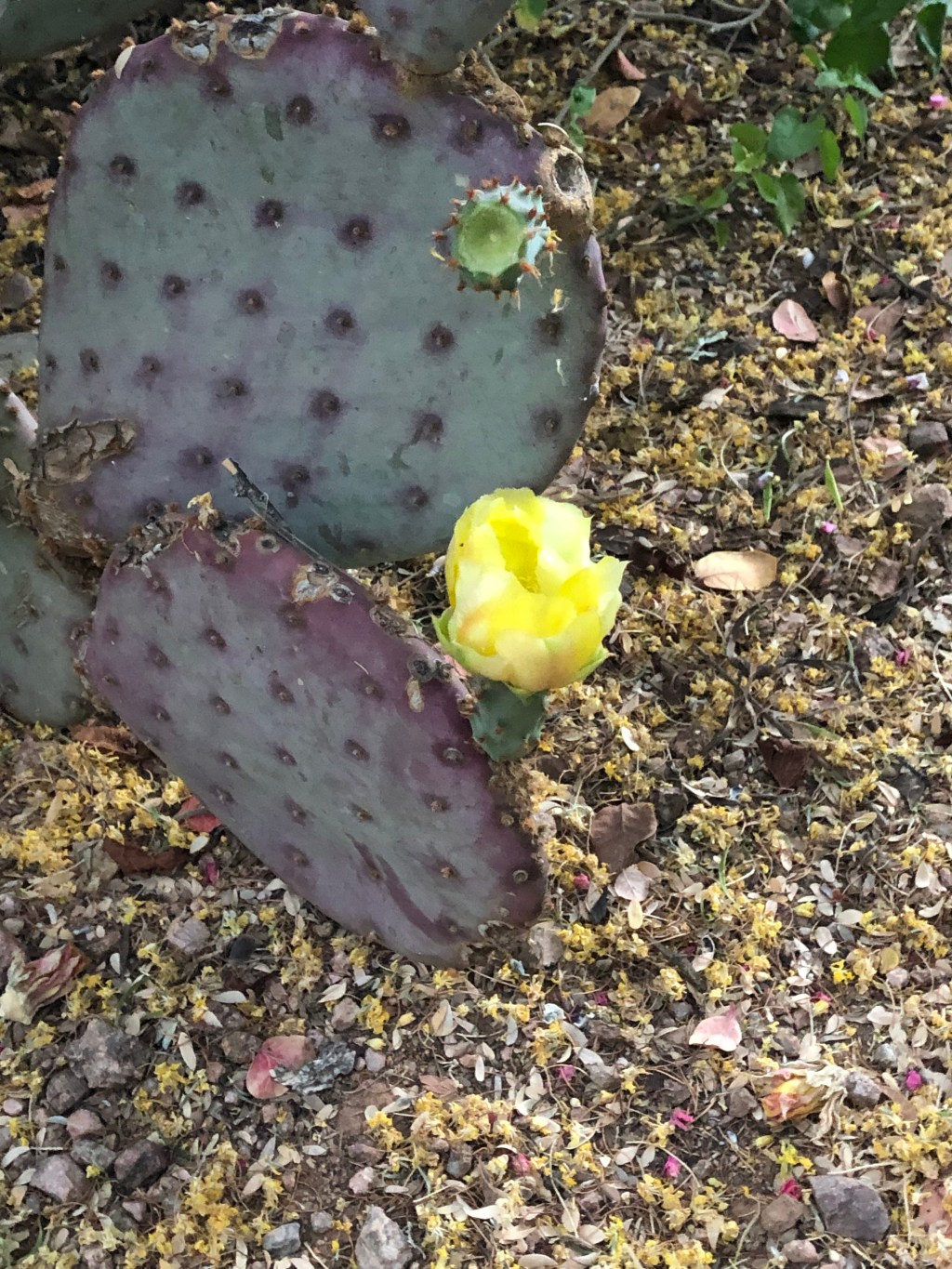
The beauty of spring in the desert corresponds directly with the amount of rain from the previous monsoon season and during the winter. We received a lot of rain, and the spring was not particularly hot. It stayed in the 60s for much longer than it usually does. I haven’t lived here long, but my neighbors told me it was their coldest winter since 2011. Local news articles concurred that it was the coldest winter in many many years. I do understand that this is not cold for many, but for the desert to stay cold up into April is unusual. As a result, spring was beautiful, and the blooms continued all spring. We have now reached triple digits, but many plants are still beautiful. The first summer I lived here we reached 100 degrees in April and stayed there until October, so by the middle of June everything was baked brown. Not this year. Therefore, this is not as much an educational cactus post as it is a visual cactus post. I have included many pictures from a trip to the Desert Botanical Garden on April 30th. Many are blooming cacti and other flowering plants, and some have new spring growth. I generally would not call the desert lush, but when spring looks like this, I think the adjective fits. You may wonder why I am not out hiking and am sticking to the controlled environment of the botanical garden. The answer is simple – snakes and heat. I am not a morning person, so it is not safe to hike in the heat in my area in the afternoon, and the snakes are out, so I am not.
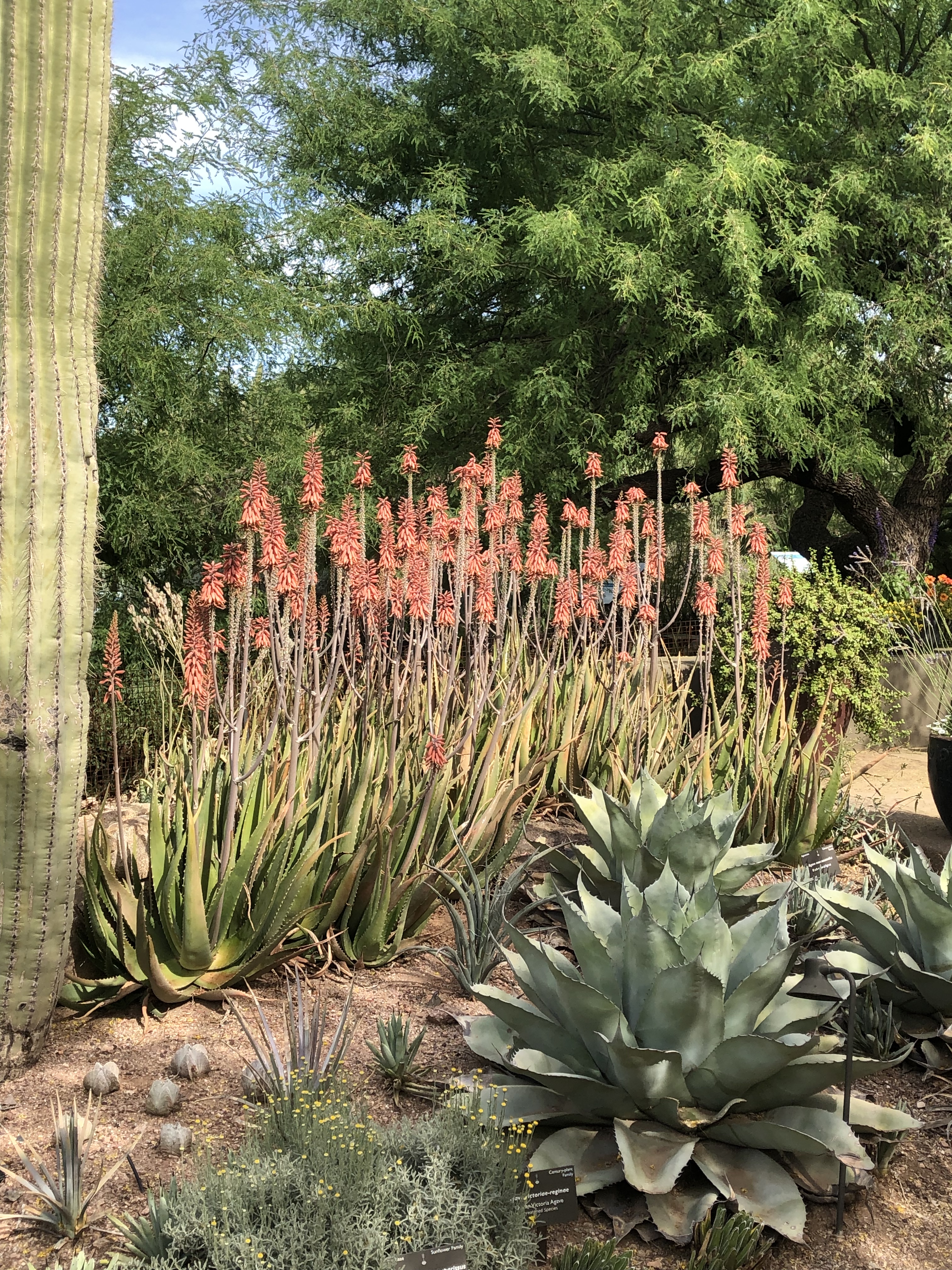
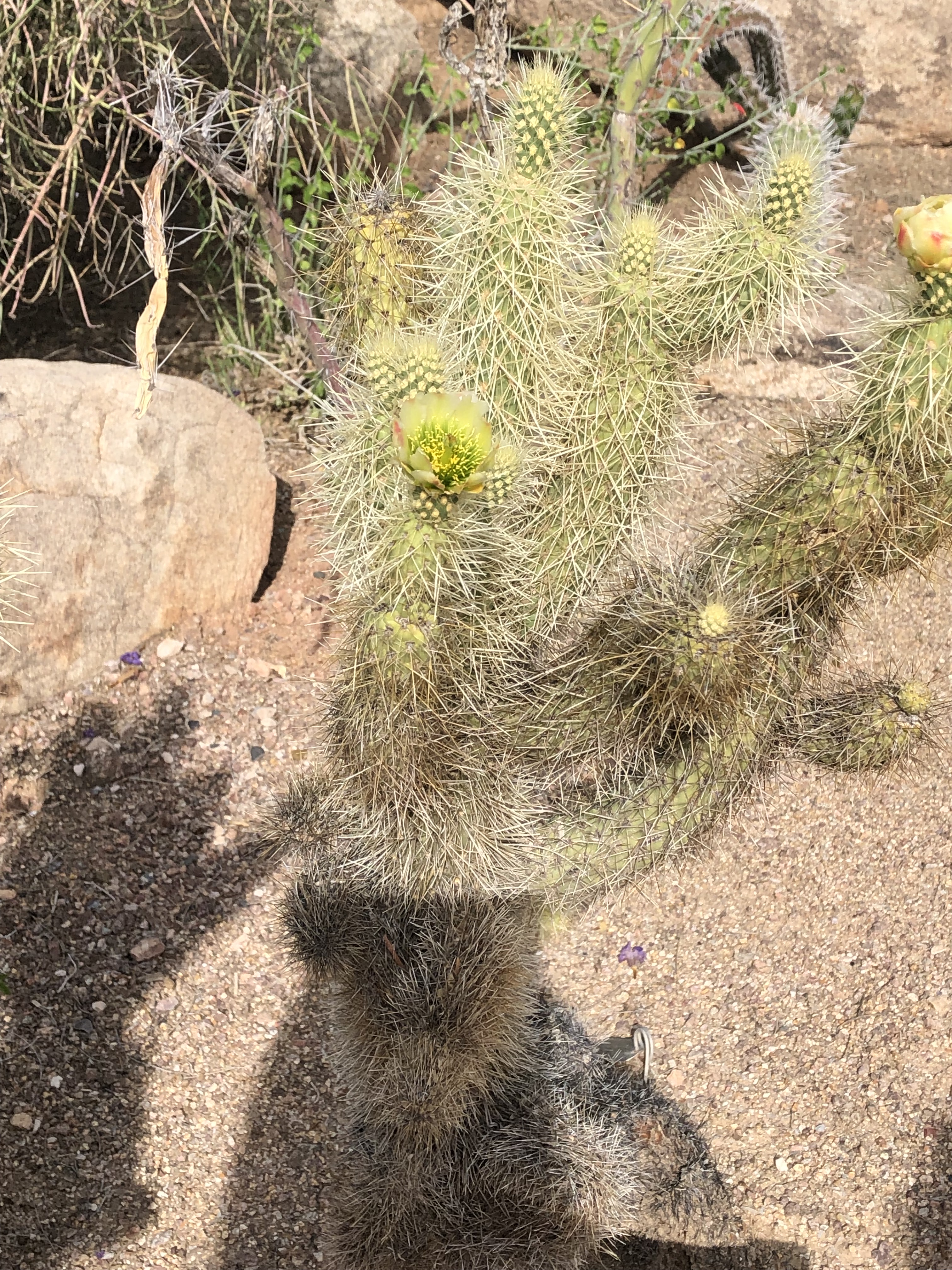
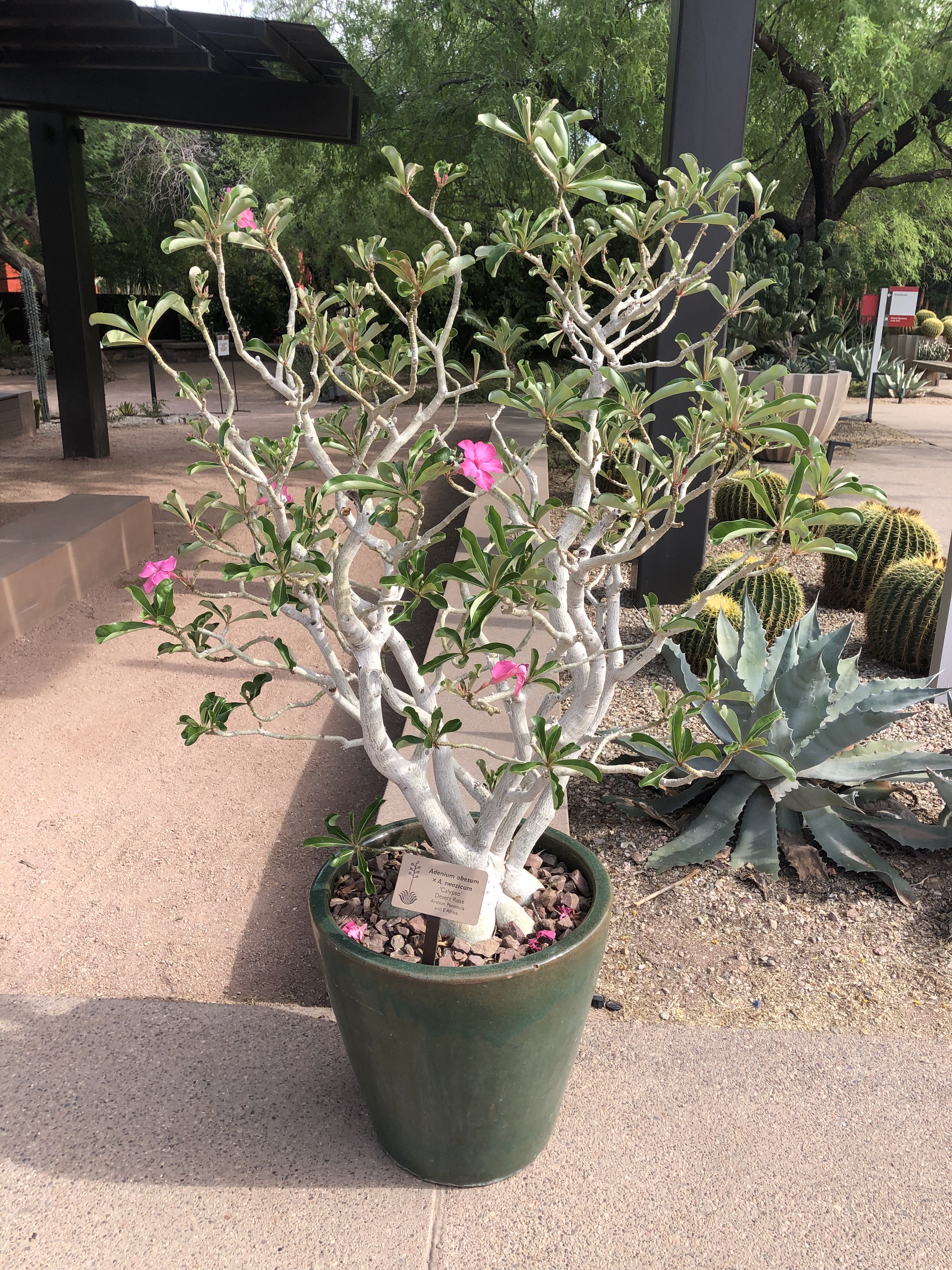

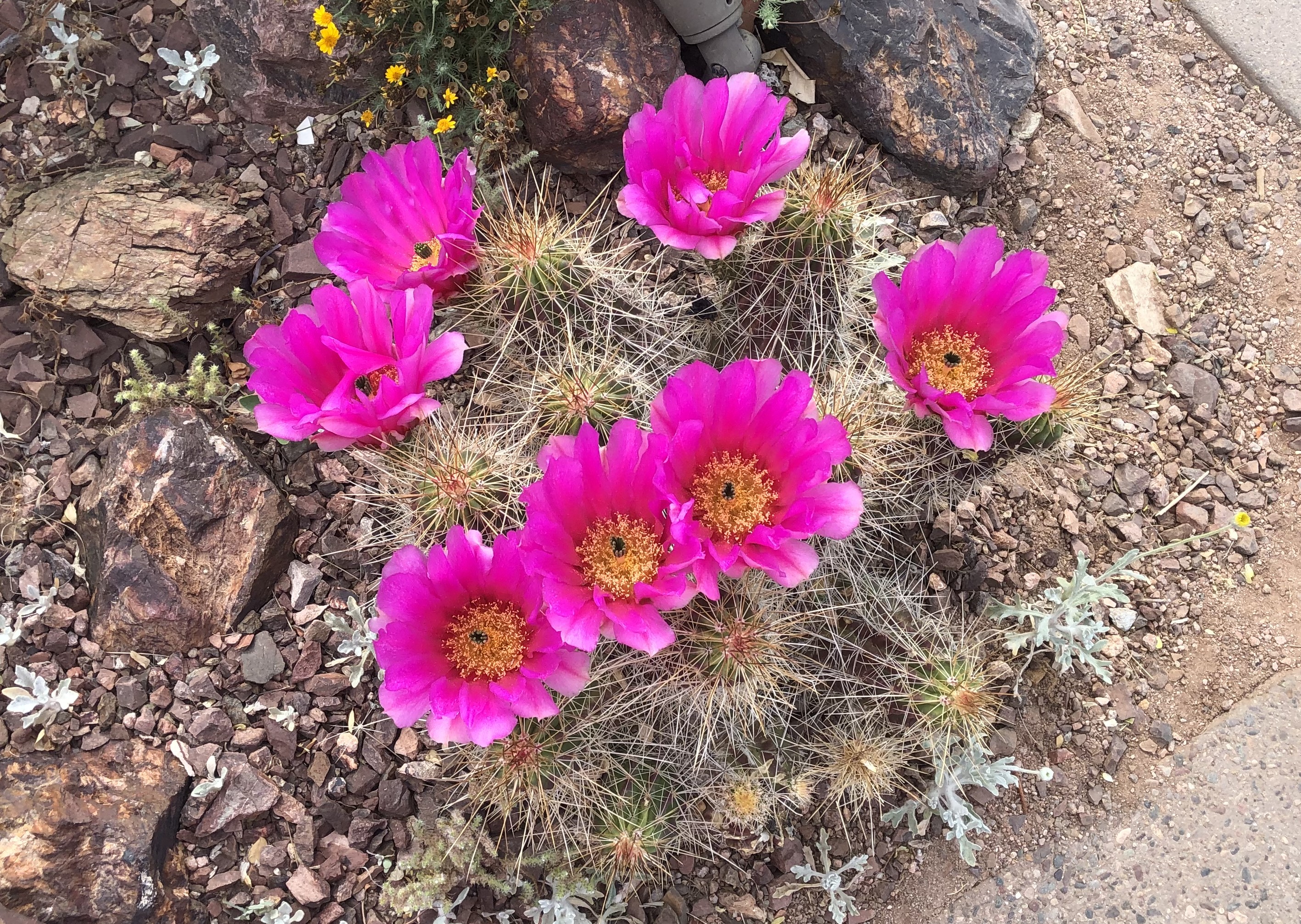
The top left image is blooming aloe, which, along with agave and yuccas, have been been in bloom for a couple of months. The top middle is a blossom on a cholla. Top right is a desert rose plant. The garden seems to take these inside during the winter, so they might not be as hardy as some of the other plants, but they brought this one back out recently and it has a few blossoms. The bottom two photographs are of the same hedgehog cactus clump from the top and the side. These vibrant magenta flowers somewhat soften the look of the abundantly spined hedgehog.

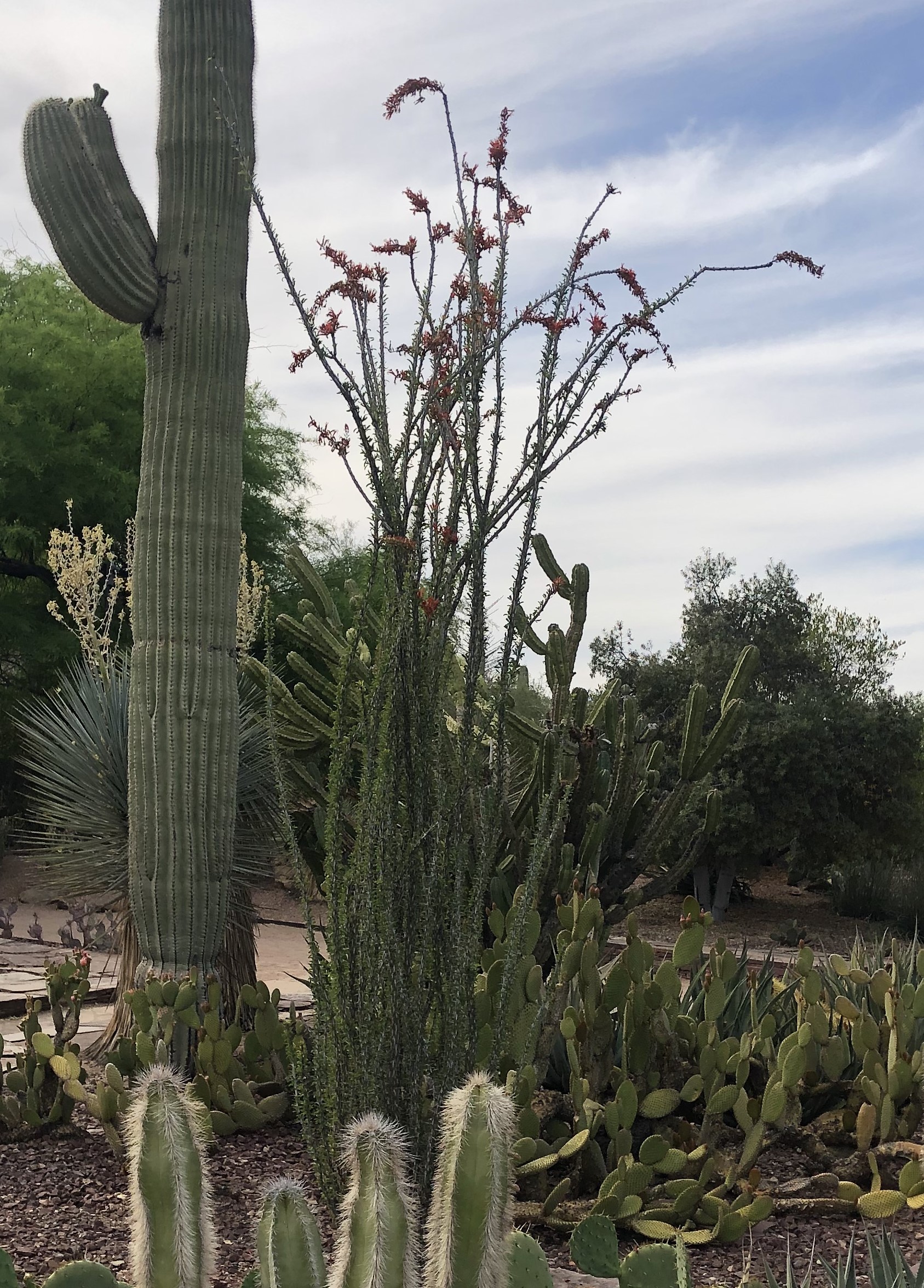
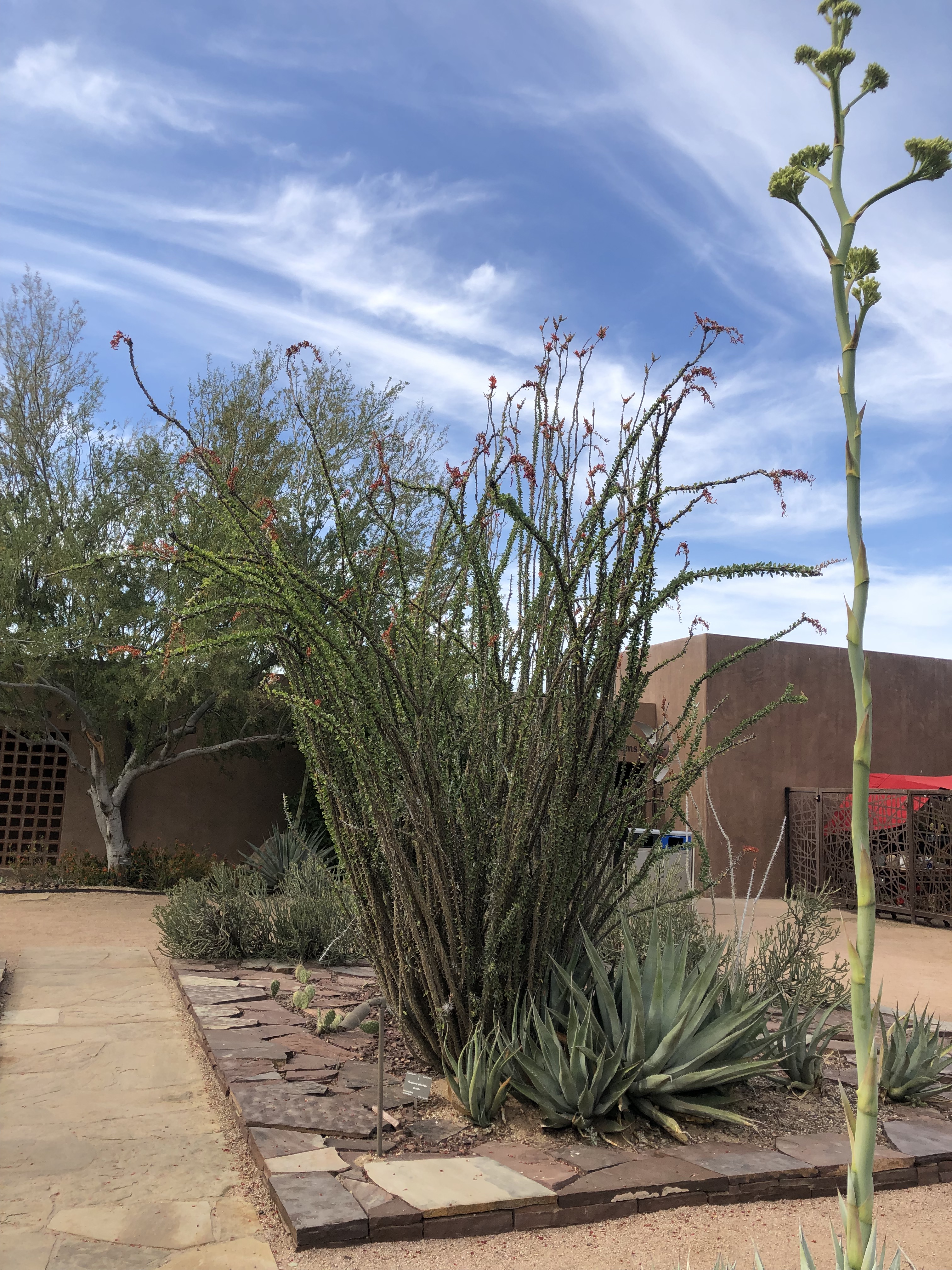
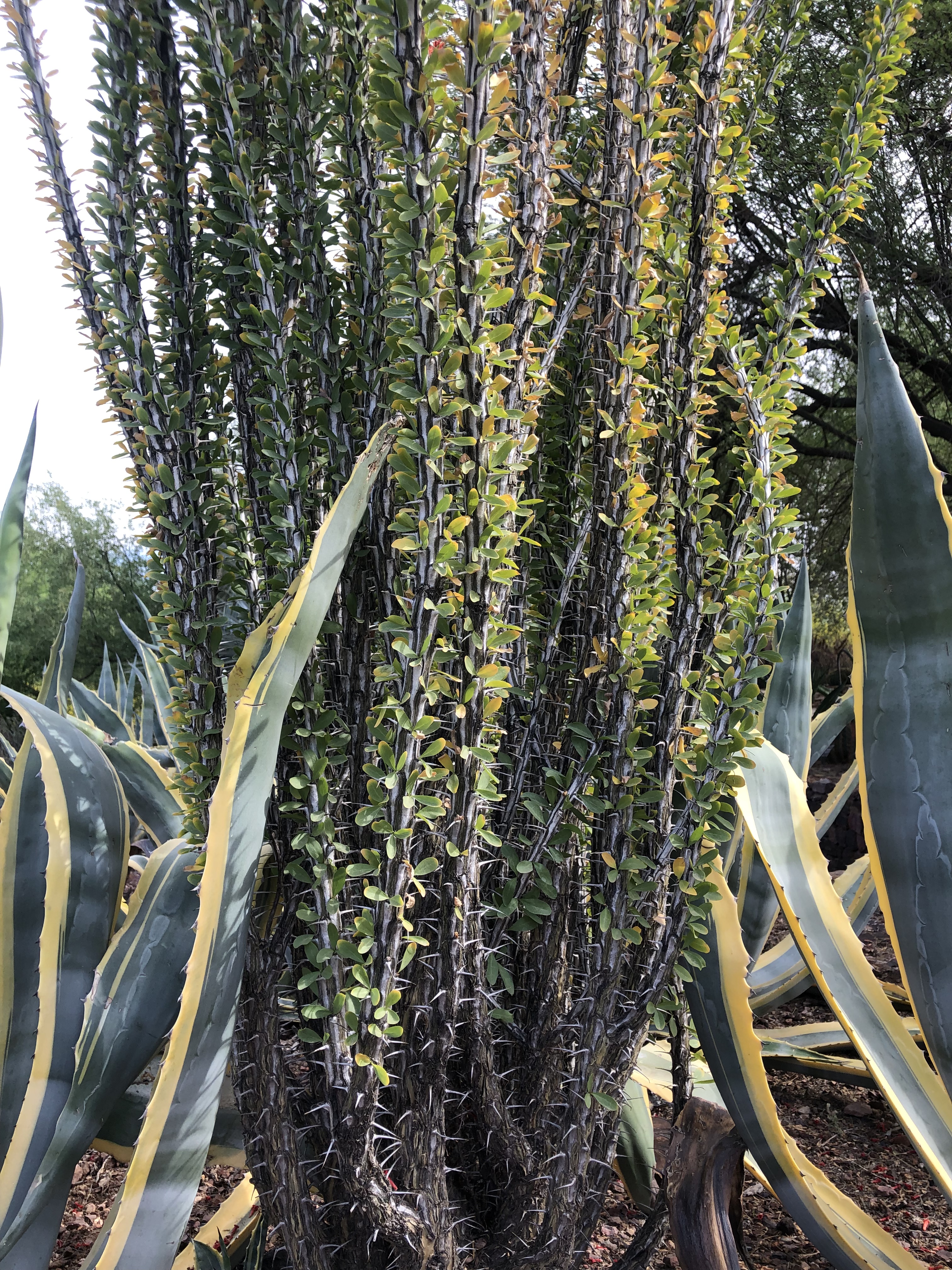
Above are some blooming ocotillos. These are not cacti, but they are common plants in the Phoenix area so I have included them. This is the first time that I have noticed the blooms on the ocotillos. These plants have woody stems covered in spines that look like viciously large thorns. Often they are naked of leaves, but the bottom photo shows how the small leaves work to camouflage the spines. This year I noticed the abundant small flowers towering over this already tall plant (I am sure they must flower every year, but for some reason they stood out to me all over town this year). I find this plant interesting because, unlike the cacti that flaunt their spines prominently in lieu of leaves, the ocotillo uses leaves to hide the thorny spikes, giving it a deceptively soft appearance from afar. Ocotillos are found throughout the Sonoran and Chihuahuan deserts, and sprout their leaves when there is enough moisture.
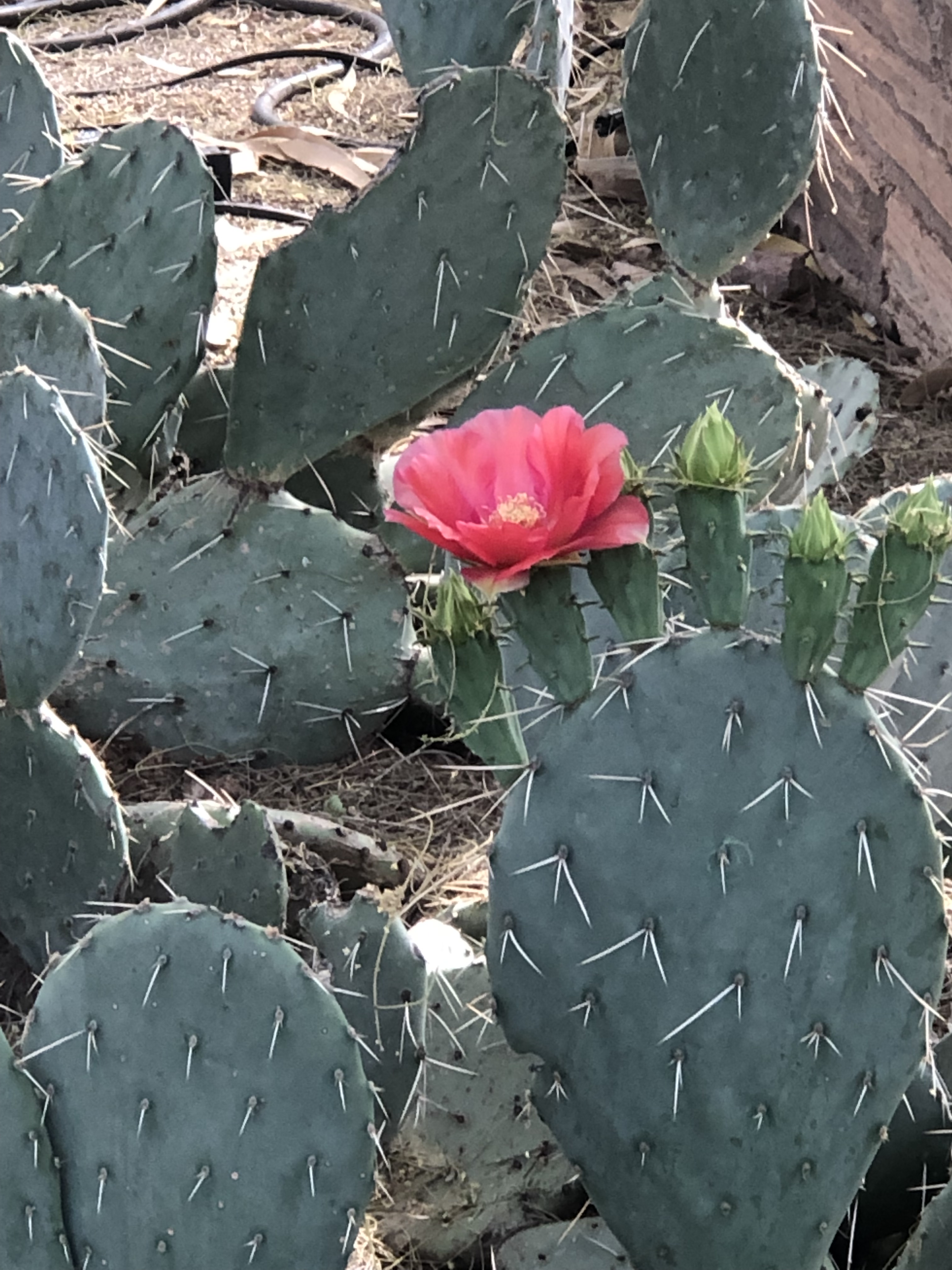


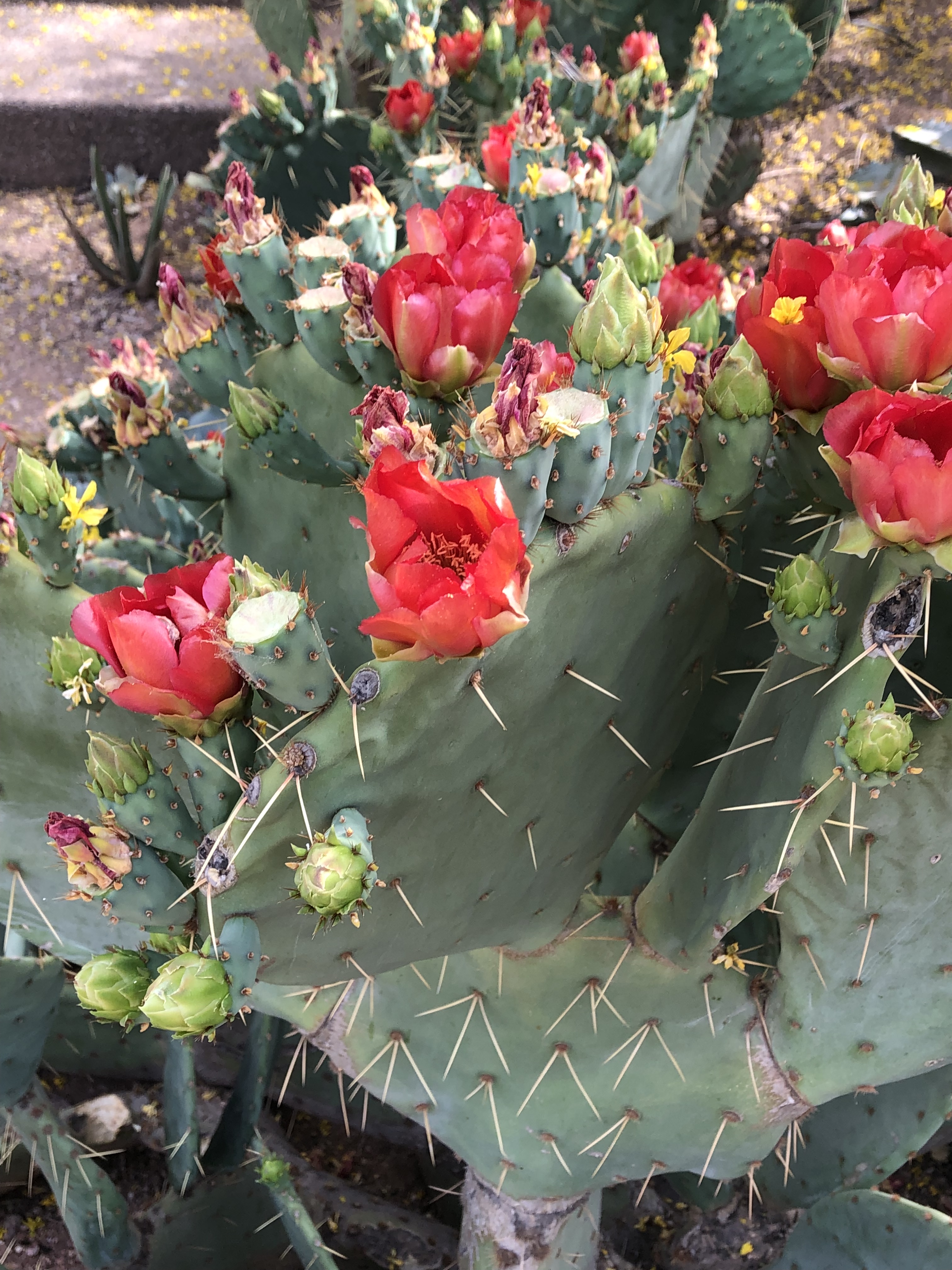
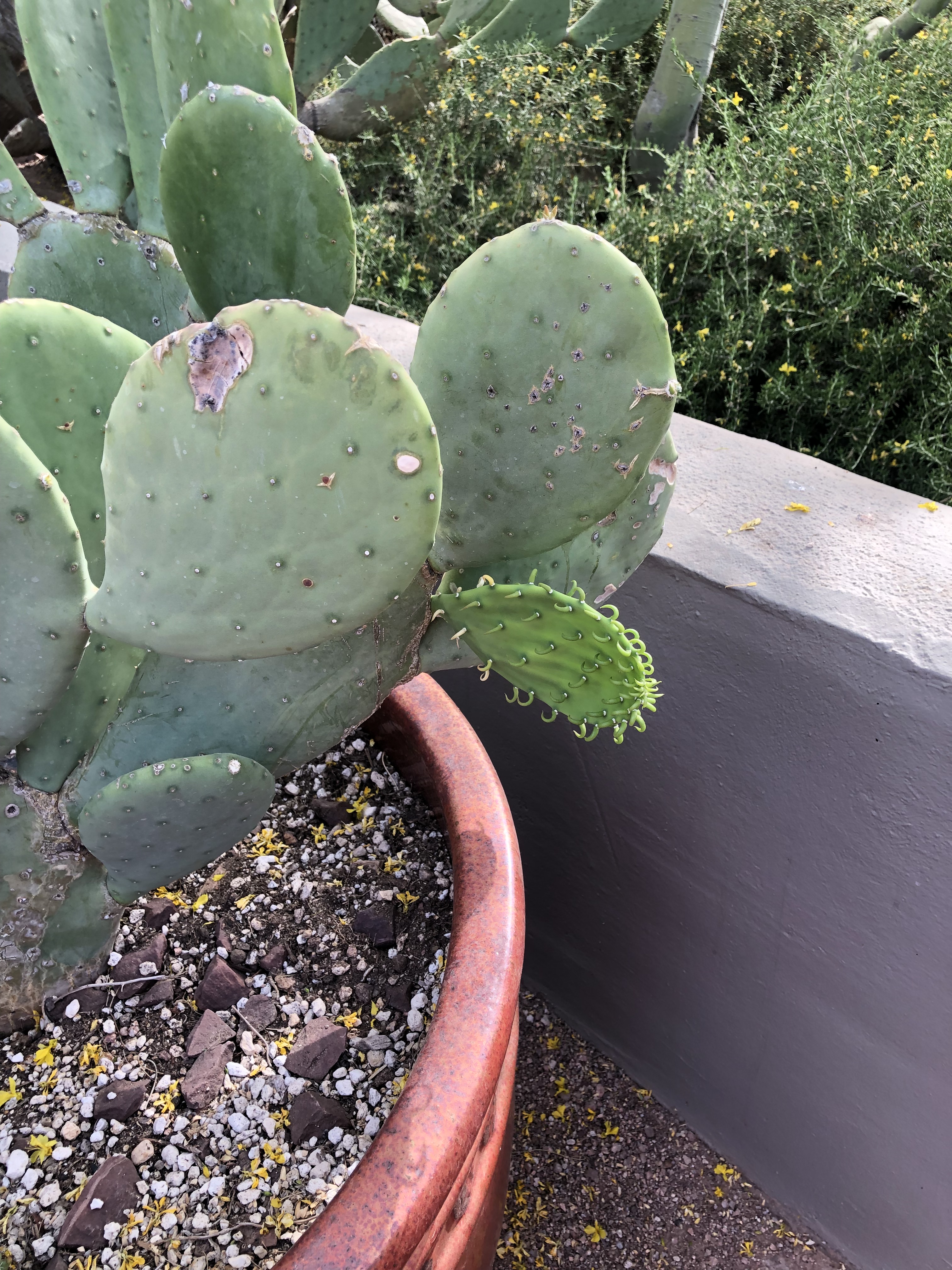
I am going to leave you with some prickly pears. Above you can see a variety of flower colors, and below you can see the exciting new growth of spring on a couple of different species. Many equate the desert with hot and dry and brown, and that is true, but there is also a tremendous amount of natural beauty among the sharp spines and brown landscape. Spring is a wonderful time to visit the desert and take in the varieties of plants, both in the wild and in cultivated locations such as botanical gardens. I recommend the Desert Botanical Garden in Phoenix, AZ https://dbg.org/ and the Boyce Thompson Arboretum in Superior, AZ https://btarboretum.org/.


 Michelle Rambles